
There’s A Reason Junk Food Makes Us Gain Weight And It Isn’t That It’s Fattening
Potato chips, like life, are just over too soon.
by The Candidly Team
If you’ve ever looked at the serving size on a bag of chips, you basically know the entire thesis of this article.
Greasy, salty, sugary, empty junk foods are not to be designed to be eaten “in moderation.” They’re not designed to fill us up, and they’re certainly not designed to help us lose weight.
But you knew all of this. You’ve heard it 10,000 times before, and it’s boring.
The real question is why is a calorie not just a calorie. Even if we do manage to “control ourselves” and stick to the 14 chips allotted to a single 150 calorie serving, why isn’t that the same as having 150 calories worth of Greek yogurt or sliced honeycrisp apples or carrot sticks and hummus? Anyone familiar with the Weight Watchers points program knows full well you can have a piece of cake on that diet. It will just take up about 72% of your points for the day*. (*Not based on real math. Author was too lazy to look this up.)
The point is there’s always been a school of thought in diet culture that tells us weight loss is a matter of calories in, calories out. Create a calorie deficit and poof, you lose weight. And it’s not wrong exactly. “While a calorie may be a calorie when it comes to the mathematical equation of weight loss, there's more to it,” wrote the Mayo Clinic. “The number of calories, though, does not predict how we'll feel afterward.” To lose weight successfully, we need to feel satiated by whatever calories we are consuming. And we’re just not going to find that satiation 14 chips deep into a bag of Ruffles.


So why does junk food make us gain weight?
1. Lack Of Nutrients
Okay, we’re going to do something pretty irresponsible here and just sweep very quickly over the fact that ultra-processed foods have been linked to higher mortality risk, cardiovascular disease, certain cancers, type 2 diabetes, and obesity. So already they’re a big fat health risk.
That said, more than 70% of the U.S. food supply falls into the category of ultra-processed, and those are the foods that are so, so painfully easy to reach for and snack on.
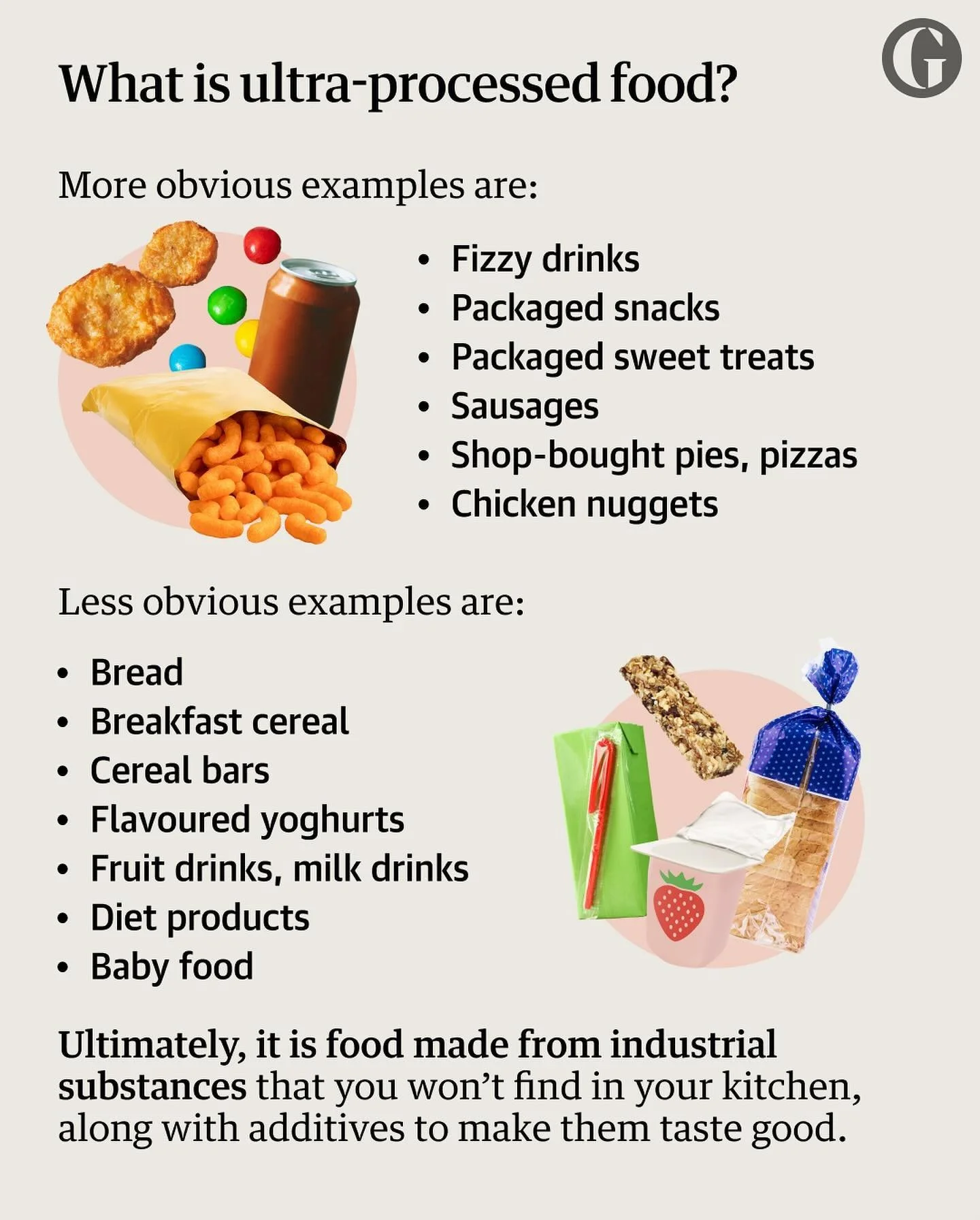
Now, as you can imagine, a food made from lots of industrial substances might be lacking in some of the key nutritional properties that make us not only healthy but satiated, namely fiber and protein, both which promote satiation, turn down hunger hormones, and keep us feeling fuller for longer.
2. How Our Metabolism Responds
It takes more energy for our bodies to absorb whole foods than processed ones. It also takes more energy to absorb protein than fats or carbohydrates. So even if we eat the same number of calories, the work that goes into digesting those foods varies and affects whether or not our metabolism will get a boost.
3. The Veruca Salt Syndrome
“Sugar makes us want to eat more sugar. Fat makes us want to eat more fat,” said registered dietitian Beth Czerwony, RD in an interview with The Cleveland Clinic. “Our brains are chasing that pleasurable state of food euphoria.” Anything we eat that leaves us wanting more and more and more makes it hard to ever feel fully satisfied, so we’re much more inclined to lose track of our health goals.
4. Volume
No matter how you slice it, being able to fill our stomachs with a higher volume of food, especially fiber-rich choices, is going to result in us feeling fuller with the same or fewer calories than a smaller portion of garbage. And not to keep harping on a handful of chips versus an apple, but an apple has been named the 5th most satiating food by a team of Australian researchers, whereas a bag of chips was recently named the food most likely to make us go back to our snack cupboards 207 times between 2-5pm by the person writing this article.
5. Blood Sugar And Hormones
Having elevated sugar and insulin levels can increase inflammation and mess with our cell signals. This can lead to an increase in fat storage, especially around the belly. It can also throw off the hormones that regulate our hunger signals and get all kinds of wires crossed that leave us less in sync with what our bodies need to feel nourished.
6. The Speed At Which We Eat
The time it takes to gobble up packaged treats and fast food is intentionally speedy. It leaves our bodies ready for more. We simply haven’t had enough time chewing, and swallowing, and feeling what it physically means to get full.
This may not all sound like rocket science to you but sometimes it takes more than sheer will power to make decisions about what we eat. Sometimes it takes the reminder that feeling full and satiated actually feels good while feeling hungry and empty feels bad. Choosing whole foods, fiber, and protein over junk food is a lot easier when we think of what we’re getting out of it rather than what we’re missing out on.
This article is for informational purposes only. It is not intended to be used in place of professional advice, medical treatment, or professional care in any way. This article is not intended to be and should not be a substitute for professional care, advice or treatment. Please consult with your physician or healthcare provider before changing any health regimen. This article is not intended to diagnose, treat, or prevent disease of any kind. Read our Terms & Conditions and Privacy Policy.
