
You Can Make Your Marriage Wildly More Exciting By Doing More Of This One Semi-Ridiculous Sounding Thing
;) ;) ;)

by The Candidly Team
We’re not the type to make you scroll 17 ads to get answers. The thing that will potentially save your marriage is this:
Flirting.
Cue eye roll.
Listen, we get it. We’re talking about the person we do our taxes with, the one who leaves workout clothes on carpet, who gets toothpaste on inexplicable parts of the bathroom, who just told us that we’re it to unload the dishwasher because they changed a lightbulb … this morning.
We deeply, deeply love this person, but we also know them through and through. What does it even mean to flirt with them? Are we not already doing it? Do cat memes not count as coquetry? Do our floor-length night dresses not send the right message?
We know that you’re an adult and maybe you think flirting is for dating or it’s just a very small piece of the puzzle in marriage. But our tendency to downplay its importance can actually have a huge impact on a relationship. Or put another way, taking those tiny bits of time to flirt can have a monumentally positive impact on a relationship.
Let’s run down why this is in bullet points, because we get that you’re busy and are probably already annoyed at us for telling you the key to successful marriage is basically to batt your eyes at your partner:




Why it matters:
It takes very little time.
Psychologist John Gottman has found in his decades of research on couples that “successful long-term relationships are created through small words, small gestures, and small acts.” He calls these small, playful behaviors “bids for connection,” which is all flirting really is: touch, teasing, compliments, inside jokes. All of it takes almost zero time but can completely flip or enliven a dynamic.
It keeps the dating energy alive.
Another famous Gottman saying is to never stop dating your partner. At risk of sounding corny, flirting is the fuel that generates all that sparkle between a couple in the early days, so silly as it sounds, kissing on the way out the door, sending a flirty text mid-day, or winking at your partner at the dinner table just keeps bringing the energy back to what got you together in the first place … which probably wasn’t a shared passion for deciding what the hell to do for dinner even though that’s what it feels like you’re doing 98% of the time these days.
It makes you feel seen.
A huge red flag in a relationship gets raised when we start to feel invisible in our relationship and all the invisible labor we do to make our lives together work. Any act of acknowledgement eradicates the damage. It helps us to not feel taken for granted and makes each person feel seen separate from all their many shared practical responsibilities.
It maintains intimacy.
Sounds obvious, but one study on flirting had couples reporting how much it helped them to heighten their feeling of closeness and connection, which is nice considering we always think we have to do big, huge things to make this happen when really small ones go such a long way.
It increases self-esteem: That same study showed a nice hearty dose of confidence being instilled in participants when their partners flirted with them. Again, didn’t need a study to tell us that, but it’s a nice reminder of how it good it simply feels.
Reduces tension and fighting: This one is huge. “When partners regularly turn away or turn against their partner’s bid they experience a lack of safety, closeness, romance, and sex,” according to the Gottman Institute. “Repeated experiences of turning away generates feelings of loneliness, disconnection, and isolation.” Flirting may be light-hearted, but it’s a serious bid for connection. When it falls by the wayside, tension and intensity seep in.
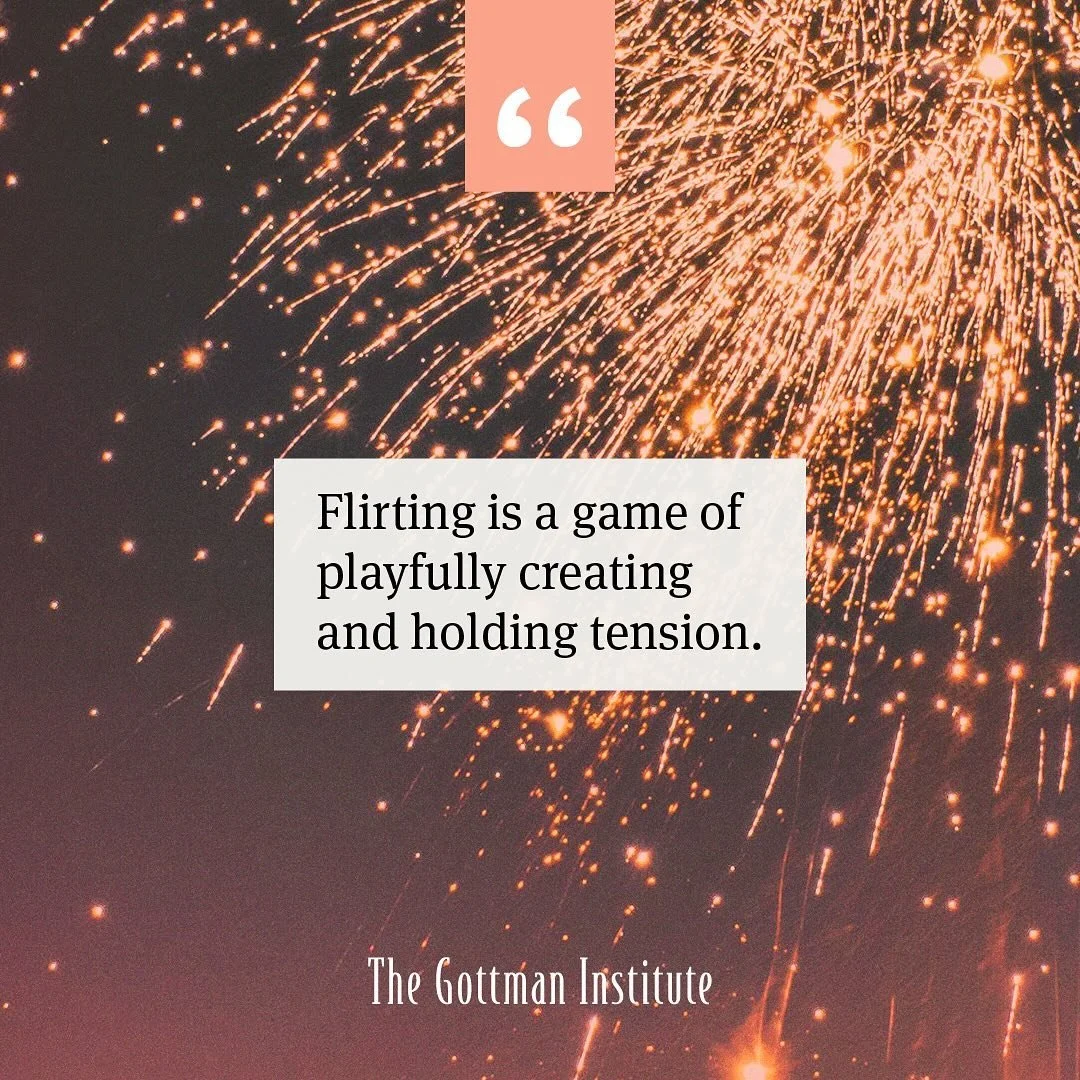
So how do you do it?
We figure, this is either the part where we lose you completely or where we actually catch your attention, because while we all know how to flirt in theory, in the course of a long, long relationship, we’re all forgetting to actually do it.
Here are some ideas that are grounded in Gottman’s principles for what keeps love alive and well:
1. Make it “thank you” based: Find daily ways to make it known that you see what the other person is offering. Wrap an arm round their waist and take the dish out of their hands to dry. Comment on how cute they look wiping down the dumb stove. Even just the words “thank you” are scientifically shown to be two of the sexiest words you can say to your partner.
2. The one-minute compliment: Take a full 60 seconds to express something you really, really like about your partner. Don’t just gloss over it. Let it siiiiiink in.
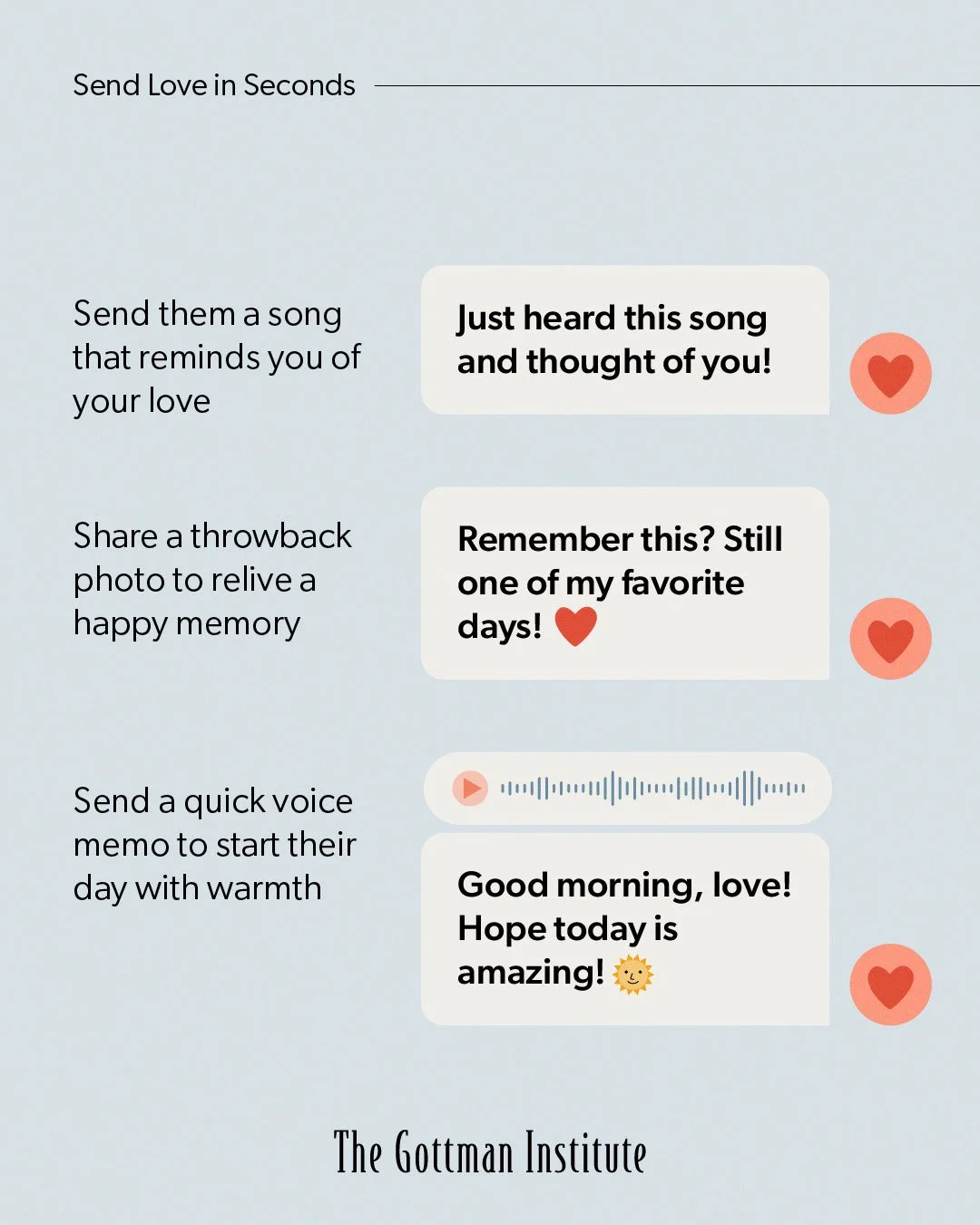
3. When not together, go the digital route: Say what you will about tech driving us apart, but texting can be a gorgeous medium for flirting. We kinda love this little visual cheat sheet from Gottman.
4. Kiss for 6 seconds: We even wrote a whole article about this because Gottman’s research says a kiss at least this exact length works all kinds of connective magic.
5. Put down your phone and lift your eyes: There is currently nothing in the world hotter than the other person lowering their phone and granting you their complete, undivided attention while you tell them about a really weird bird you saw that day.
6. Ask them about themselves: You feel like you know it all, which is part of what’s built this monumental intimacy between you, and yet, forgetting to show an interest in our new thoughts, feelings, and experiences is a killer of attraction. Ask about work, what they thought of the movie, joke, tease, touch them as they talk to you. It’s so simple but so important.
7. Always look for the chance to laugh: We don’t mean courtesy laugh at their worst jokes. We mean find the hilarity in the mundane, going-wrongedness of the life you’re sharing. It can change your world.
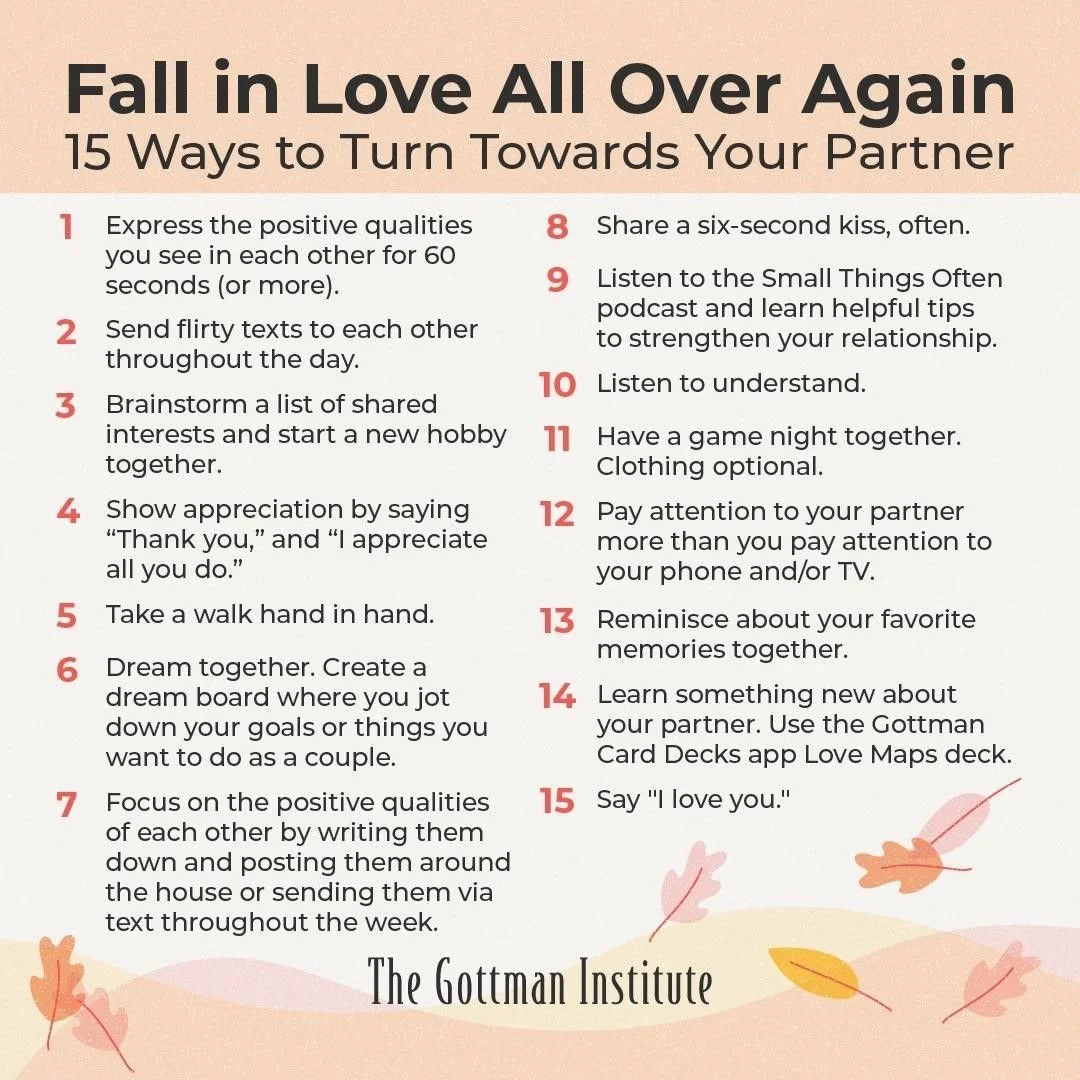
And if you’re ever at a loss for ideas, there’s no shame in looking at this chart - short and sweet - just like flirting should be.
This article is for informational purposes only. It is not intended to be used in place of professional advice, medical treatment, or professional care in any way. This article is not intended to be and should not be a substitute for professional care, advice or treatment. Please consult with your physician or healthcare provider before changing any health regimen. This article is not intended to diagnose, treat, or prevent disease of any kind. Read our Terms & Conditions and Privacy Policy.
