
7 Clues You Can Use The Moment You're About To Spiral To Prove It's Your Anxiety And Not Reality
We call it perception interception ... because it’s kinda cute.

Image: 20th Century Fox
by Carolyn Firestone
The first day I met with a therapist for obsessive compulsive disorder, I was handed a sheet of paper that almost immediately changed my life.
All it contained was a succinct list of the surest clues that your brain, with OCD at its helm, is lying to you. The more technical term for it is cognitive distortion. It’s something many of us with anxiety disorders (or anxiety in general, experience) - the idea that this thing we’re worrying about at this moment is real - and not only real but the biggest, most pressing thing going on in our lives. We have to think about it, hone in on it, repeat it over and over, let it snowball and see where it rolls.
The list of cognitive distortions were printed in small type, each in bold. Every single one was relatable, but it was hard for me to imagine them being helpful. “Okay, I do all of these things,” I thought. “But how do I stop?”
But as our sessions moved along, every time I would bring up some heinous crime I’d imagined I committed to my OCD therapist (e.g. “I didn’t clean the windowsill before opening the window and now toxic ash from a forest fire seven months ago probably blew into my son’s room so clearly I should wipe down everything in it, including every book on the bookshelf.” You know? That sort of thing), my therapist would say something like “hmm, doesn’t that sound like magnification?”
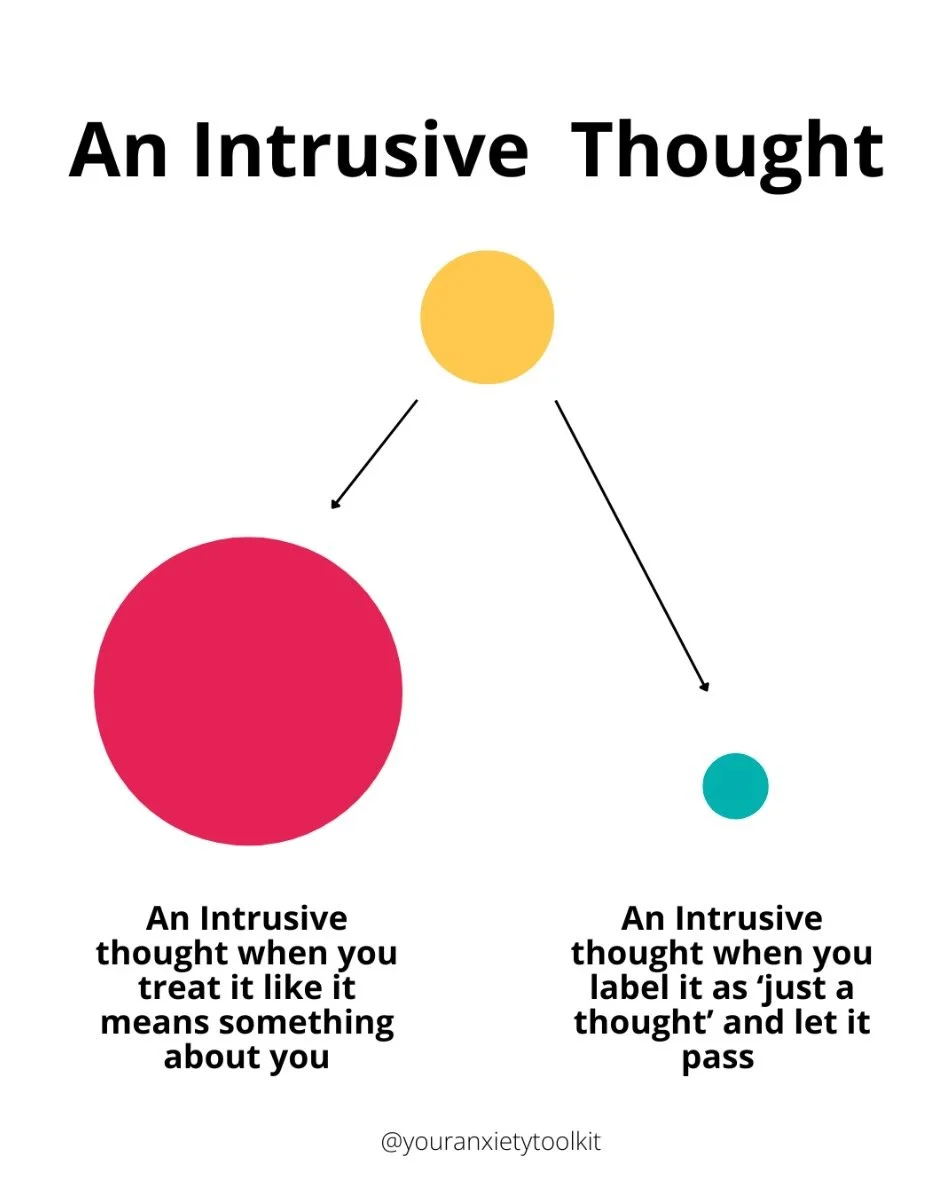
By categorizing each of my thoughts into one of the distortions on the page, I was able to start to see them as well … distorted. It’s the age-old idea that labeling your anxiety as anxiety can be that first folded corner that helps you peel back the sticker to reality.
There are many cognitive distortions that affect our mental health, but these seven ways of thinking can serve as clues that our thoughts are basically the garbage byproducts of anxiety. Recognizing them as such can help us get hold of our unhealthiest of obsessive thoughts before they get hold of us:




1) Magnification or catastrophizing
The way in which we assume only the worst outcomes will come from an event or circumstance.
I have this pain in my hip. I’m sure it’s cancer, and it’s probably too late to treat.
I forgot that actor’s name. This is definitely a sign of dementia.
I wasn’t paying attention when my kid was playing on the couch. He could have broken his leg. I can’t just let it go and forgive myself because I got lucky and nothing happened.
2) Emotional reasoning
The idea that our feelings are sure signs of reality. They can make us jump to conclusions and feel guilt, disgust, or insecurity in our environment.
I’m feeling really unsettled in the house, so something must be wrong with it.
I’m feeling guilty toward my mom for some reason, which means she’s probably mad at me.
I feel so gross right now. Nothing around me is actually clean.
3) Personalization
The act of assuming even the broadest of things are our fault.
If the house has a leak, it’s because I forgot to check something.
If the kids get sick, it’s because I did a bad job teaching them the right way to wash their hands.
If my boss seems stressed, it’s because I suck at my job and she’s ready to fire me.
4) All-or-nothing thinking
A way of seeing things through an extreme filter - as black or white.
I didn’t clean the baseboards. The whole house is disgusting.
I like listening to crime podcasts. I must be a sicko.
I let the kids watch TV all night. I’m the shittiest mom I know.
5) Perfectionism
The process of persistently thinking we should or must do something a specific way to be okay
I should triple-check the form. Otherwise, I’ll seem incompetent.
I ate that mini cupcake in the meeting. I’m never going to be healthy.
I have to find the absolute best non-toxic cleaner to clean the tub. The way I do it, it’s either full of chemicals or full of germs.
6) Hyper-Responsibility
A belief that we alone must do certain things to prevent bad things from happening
I have to warn people about how bad for them that food is. Otherwise it will be my fault when they get sick.
I have to inspect the kitchen myself or the house will catch fire and it will be because of me.
I have to check in on everyone before I go to bed to make sure they’re okay. Otherwise something bad could happen.
7) Mental Filtering
The act of focusing on the negative and discounting or minimizing the positive
He said I look pretty, but I know what a pig I am.
They’re realizing it was a mistake to promote me.
The doctor said I’m in good health but then he mentioned that one test he wants to run. It’s probably serious.
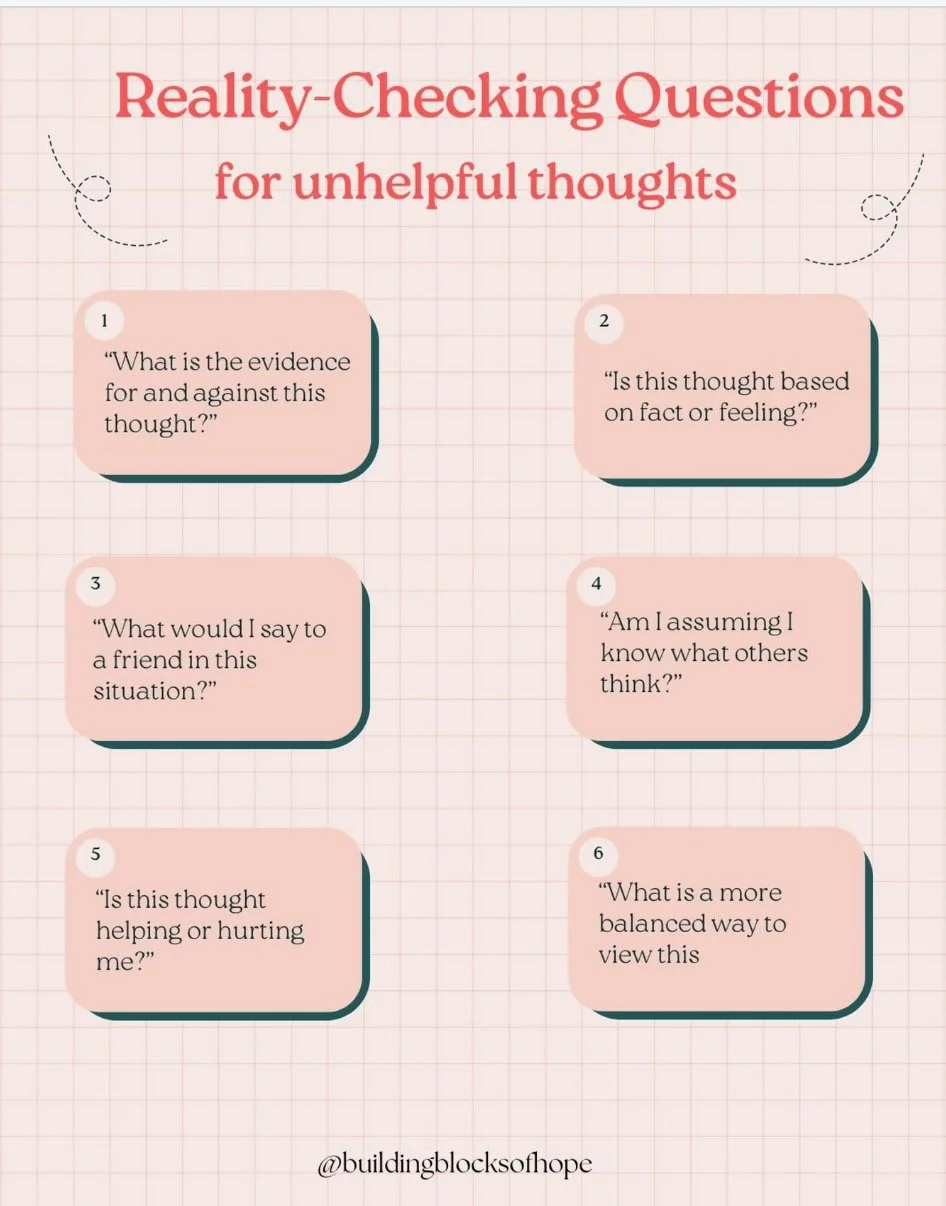
When working through treatment for OCD, the practice of putting my thoughts into these categories helped me immediately identify them as symptoms of an illness as opposed to realities I must deal with. The same can be done with anxiety. Anxious or obsessive thoughts are always going to find their way to us, but our ability to identify them as “anxiety” is what enables us to let that thought move right along rather than clinging onto it as part of our identity or belief system.
The better we get at catching these thoughts, the less likely we are to ruminate, and the less we ruminate, the less importance our brain learns to give to such thoughts. It is indeed a cycle that leads to us eventually having fewer anxious thoughts to deal with. The whole thing is a process, but it’s one that always, always starts with seeing ourselves (not to mention the world around us) as fundamentally unconnected from the unrelenting voice of our anxiety.

carolyn firestone
Carolyn is a freelance writer and editor. Her favorite thing to do is to write about her favorite things, especially when they have even the slightest chance of making someone else’s something (mood, relationship, travel plans, or toiletry kit) a little better. You can find more of her articles here.
This article is for informational purposes only. It is not intended to be used in place of professional advice, medical treatment, or professional care in any way. This article is not intended to be and should not be a substitute for professional care, advice or treatment. Please consult with your physician or healthcare provider before changing any health regimen. This article is not intended to diagnose, treat, or prevent disease of any kind. Read our Terms & Conditions and Privacy Policy.
