
Do You Absorb Everyone You Love's Problems? If So, You Might Be An Empath.
And it may be costing you more than you think.

Image: Little Women | Columbia Pictures
If you buy something we link to, The Candidly may earn a commission. Gifted items will be called out (gifted), and affiliate links will include an asterisk (*). We have to eat, after all.
by The Candidly Team
Do you ever feel like a sponge absorbing the pain and problems of those around you? Or like you’re developing the physical symptoms of a sick friend describing them to you in real time? Maybe you’re the sort of person who sobbed during the Sarah Mclachlan animal cruelty ads? Or maybe, that’s a bad example, because we all did at one point or another.
Most of us consider ourselves to be empathetic. But there are some of us who have our empathy switch turned up so high we can barely hear the sound of our own problems.
These are the people we’re really talking about when we use the term empaths.
Empaths are deeply affected by and tuned into other people’s emotions, absorbing them almost as their own. They experience the world on a heightened level. They notice microexpressions, worry over others’ moods, feel sick at another’s sickness, pained at their embarrassment, and because of all this tapped in sensitivity, the world can feel like A LOT.
This leaves empaths needing more time alone, more time to reset. They prefer to avoid lots of noise and large crowds. They’re sensitive on all cyinders, but especially those tied to feelings.
Any of this sound familiar? Well then, you, my friend, might be an empath. But let’s dig deeper shall we?


What Turns Someone Into An Empath?
While the label of empath isn’t an official diagnosis, these characteristics can come from a combination of genetics, temperament, trauma such as neglect or abuse, or even positive early life experiences wherein empathy and sensitivity were nurtured and supported by parental figures. There is, after all, a yin and a yang to being an empath.
“Empaths and sensitive people often experience some level of post-traumatic stress,” wrote Judith Orloff, M.D., author of The Empath’s Survival Guide. “This is, in part, because they’re on sensory overload for so many years that their systems are flooded with adrenaline. Other reasons include early neglect, abuse, or simply that they didn't feel ‘seen’ or have their sensitivities supported in their families.”
Some experts speculate that empaths become empaths because they have more “mirror neurons” causing them to mirror an exaggerated amount of other people’s emotions, or it may be because they have a highly sensitive nervous system, picking up on the subtlest of frequencies of everyone around them. While not all highly sensitive people are empaths, all empaths are highly sensitive people.
Signs That You’re An Empath
Being an empath isn't the same as “showing empathy” or being a “good person.” In fact, it can be a trauma response, something that grips a person in ways they can’t control. To identify signs you might be an empath, ask yourself the following questions:
Do you take on or start to feel the feelings of those close to you?
Do you react especially sensitive to the plights of characters in TV or movies?
Do you tend to put others first and be selfless in your actions?
Do you pick up on unspoken signals and trust your intuition about people and situations?
Do you have sensory sensitivites, reacting strongly to sounds, smell, etc.?
Do friends and family come to you to spill their problems?
Do you tend to play the role of mediator or peacekeeper?
Do you feel a strong protective feeling toward nature or animals?
Do you feel drained when a lot of people are around?
Do you need to be alone to reharge?
Do you feel like your emotional state is more intense or immediately set off than others?
Do you pick up on energies in a room and intuitively feel something is wrong?
Do you reactions and sensations sometimes feel independent of you, like they come from somewehre or someone else?
Do you worry you may feel consumed by a relationship?
Do you need an “out” for every potentially overwhelming situation?
Does all of this leave you with a raised anxiety level?
Do you feel overwhelmed and distracted by the state of the world to the point you find it hard to function in your own life?
These are all indications of being an empath. The upside is we are likely a trusted and reliable friend. The downside is we may fail to set boundaries and sacrifice our own mental health and general needs in favor of others.
What Kind Of Empath Are You?
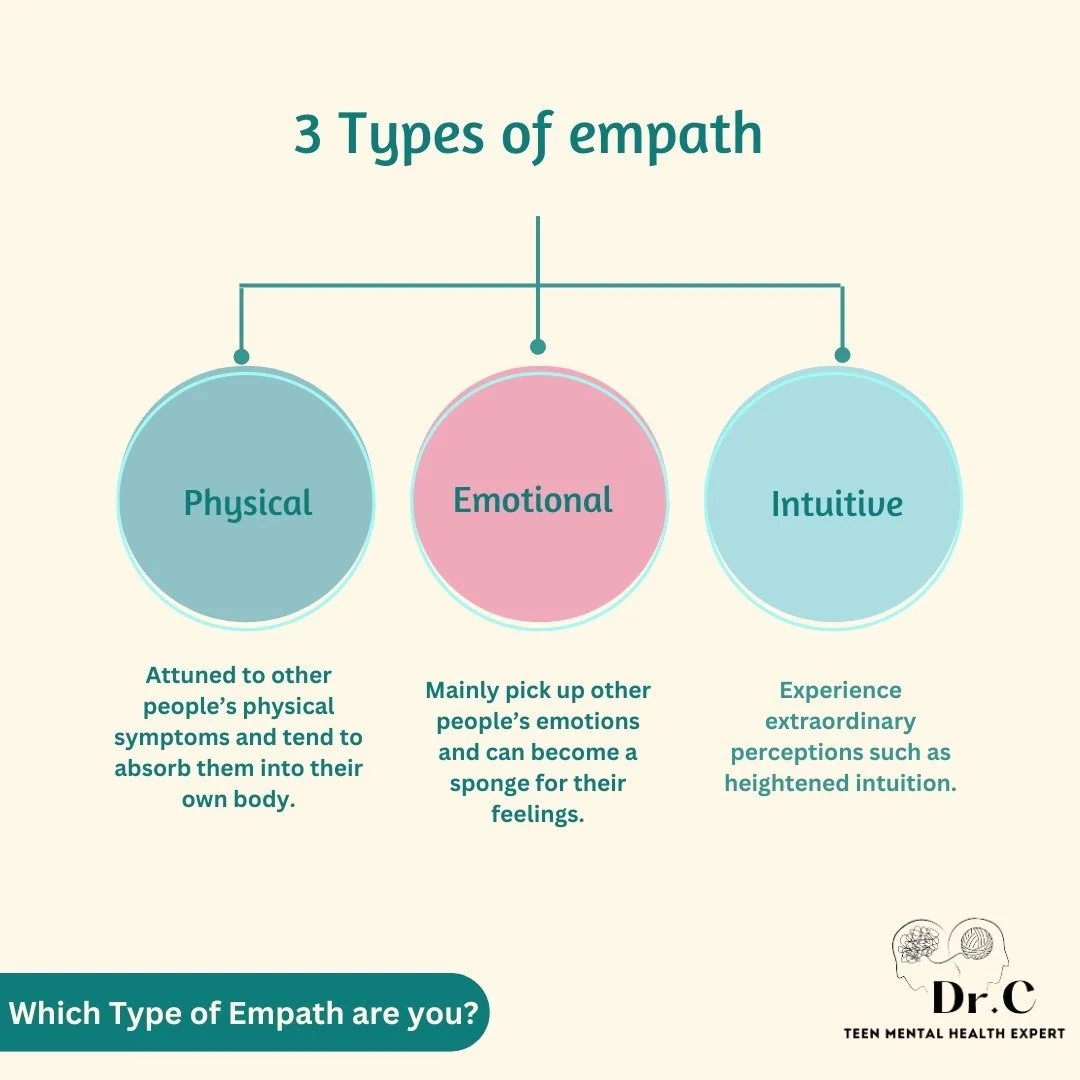
There are generally thought to be three categories of empath … as well as one “dark” fourth kind that we doubt anyone will admit to, but you may be able to identify one in your life.
The Emotional Empath: This is just what it sounds like. You take on the feelings of others and carry a sense that you need to fix it in them in order to feel calm within yourself.
The Physical Empath: You feel others’ pain and discomfort. You may cough because someone else is coughing, get nauseous because your friend has a stomach bug. You’re so immersed, you actually experience another person’s symptoms as your own.
The Intuitive Empath: There are many beliefs around empaths that link its traits to something spiritual or psychic. Intuitive empaths are good at picking up on energies and perceiving the smallest of dynamics at play in a room.
The “Dark” Empath: Alas, every power can be used for evil. Perhaps that’s overstating it, but there is a sort of ironic circumstance in which some empaths may use their insights and sensitivities to manipulate others and bolster themselves, having traits that can go hand in hand with narcissism.
Is There A “Cure” To Being An Empath?
Caring for others in a deep, concentrated way can make you a great listener and a genuine, supportive friend. These are by no means traits any of us would hope to change about ourselves, but unsurprisingly, empaths can lose hold of their own boundaries. They can suffer excessively and feel emotionally drained. And they can ignore their own needs, wants, and goals.
This is where health organizations like The Cleveland Clinic say things like “make time for yourself,” “spend time with people who can pour into you as well,” and “find a good therapist.” These are obviously great recommendations, but like many broader self-care suggestions, they can be easier said than done.
Whether it’s the challenges and traumas that led you to become an empath or the condition of being an empath itself that’s caused you to feel “flooded” in your life today, healing can come in various ways. Orloff suggests writing about early experiences in a journal, letting yourself fully feel the emotions that arise, directing love toward your child self, setting clear boundaries with others, meditation and conscious breathing, along with an enormous dose of self-compassion.
Bottom line: with all the feeling an empath is capable of feeling, it’s important for some of those feelings to be felt in the service of yourself.
This article is for informational purposes only. It is not intended to be used in place of professional advice, medical treatment, or professional care in any way. This article is not intended to be and should not be a substitute for professional care, advice or treatment. Please consult with your physician or healthcare provider before changing any health regimen. This article is not intended to diagnose, treat, or prevent disease of any kind. Read our Terms & Conditions and Privacy Policy.
