
Do You Know The Big Five Personality Traits? And Do You Have Them?
Spoiler: You definitely do. But which ones?

Image: The Breakfast Club | Universal Pictures
by The Candidly Team
Perhaps we were never “seen” accurately in our households of origin or perhaps we just lack stimulation on the occasional Sunday afternoon, but whatever the rationalization, we do love ourselves a personality test.
Don’t you?
At best, it’s a brighter spotlight into who we are and why we act the ways we do. At worst, it’s a bit of fun.
Whether it’s astro signs or enneagrams or scientifically sound categorical models like the ones we’re about to discuss, more may as well be more when it comes to self-awareness. Wasn’t it Aristotle who said, “Knowing yourself is the beginning of all wisdom?” So, in our quest to get wiser, let’s dive into the five big personality traits also known as the five-factor model of personality. It’s pretty illuminating. And unlike most horoscopes written on a Friday at 4:13pm by the most junior copywriter in the Lifestyle section, we’re not just making this up as we go.




But first, just a very quick bit of background:
The Big 5 personality theory is arguably the most broadly accepted, research-based model defining the main categories of personality.
These five traits are believed to arise from a combination of genetics, upbringing, and environment and to stay relatively consistent throughout our lives. To a degree, these characteristics can be generational, passed down from parent to child. They can help predict how we’ll do in our careers*, our schooling, our relationships, and our health.
To help remember them, they’re often referred to by the acronym OCEAN.
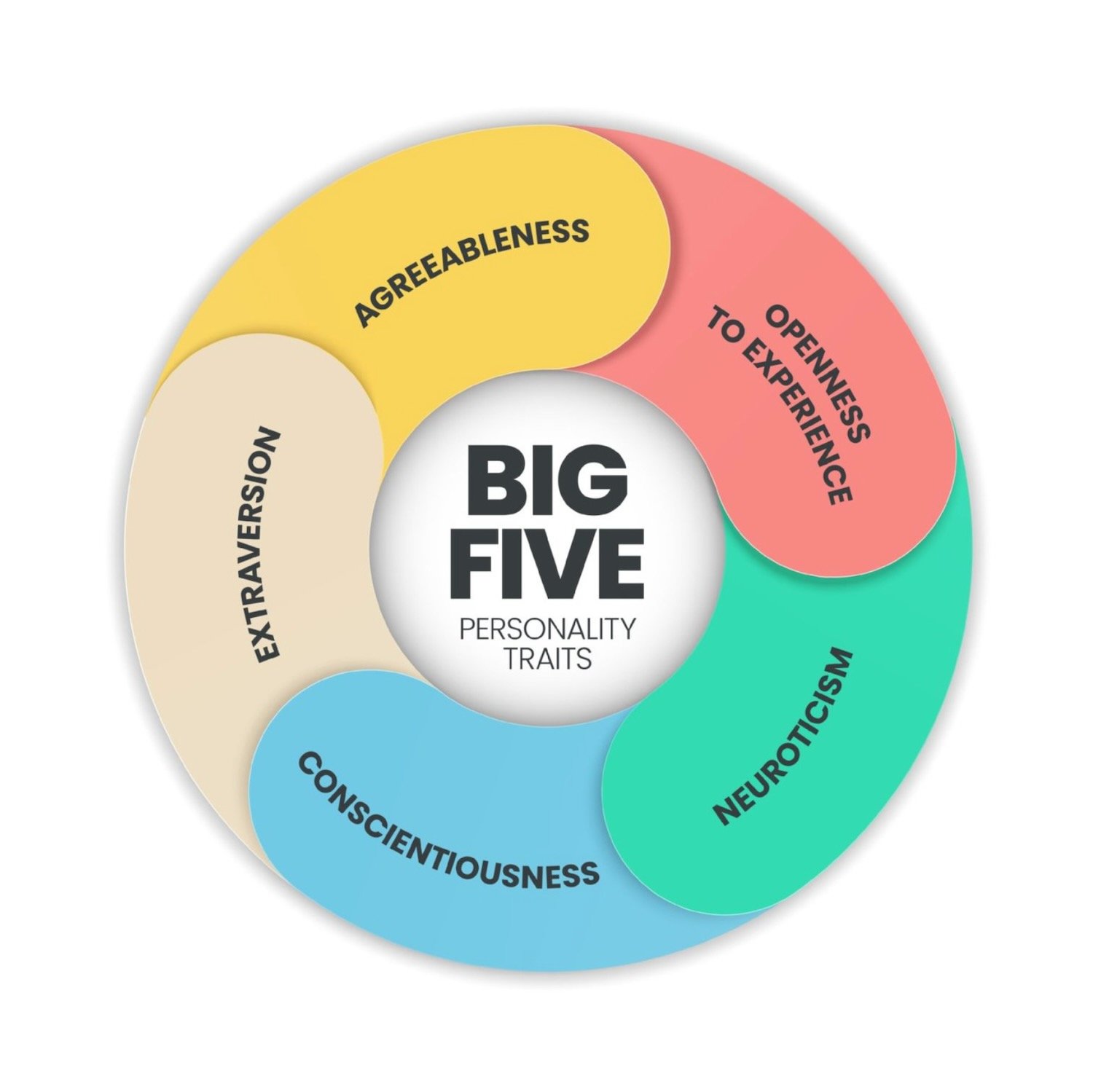
Each of the big 5 traits exists on a continuum, meaning you can fall somewhere on the spectrum as opposed to being fully categorized under a single label. For example, if you were to take a big 5 personality test, your results could look something like this:
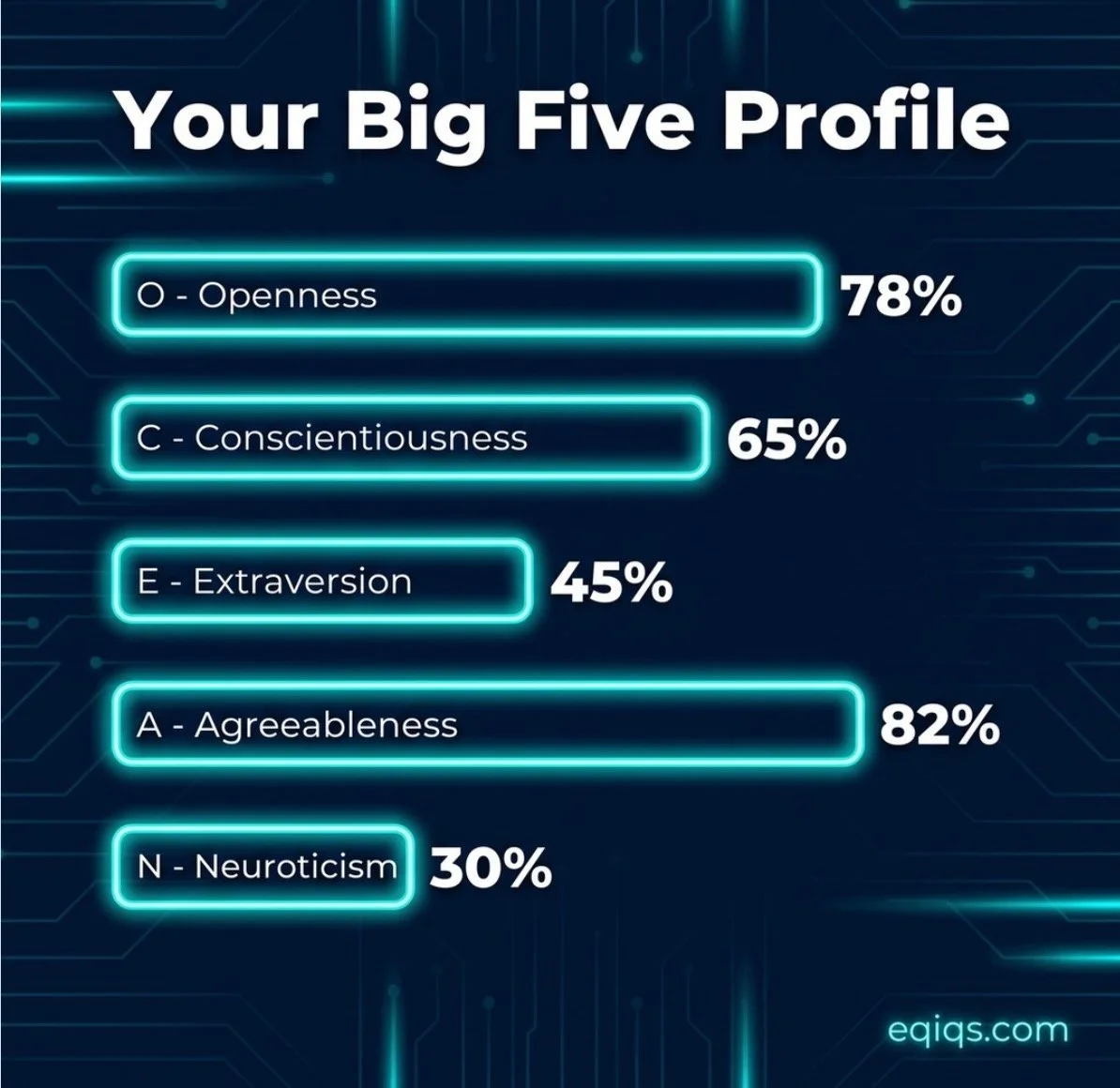
Okay, now that you have some context, let’s get to the characteristics.
What are the Big 5 Personality Traits?
1) Openness to experience
How well do the following words describe you?
Imaginative
Curious
Intellectual
Enjoying of new experiences
Adventurous
Risk-taking
Interested (in other opinions and ideas)
Comfortable with change
Unconventional thinker
If these words resonated with you, you may score high on the openness continuum.
2) Conscientiousness
How well do the following words describe you?
Goal-directed
Organized
Disciplined
Cautious
Reliable
Conscientious
Routinized
Hard-working
Detail-oriented
Pensive
If these words resonated with you, you may score high on the conscientiousness continuum.
3) Extraversion
How well do the following words describe you?
Social
Engaged
Friendly
Active
Energetic
Talkative
Comfortable with attention
Ease in meeting people and making friends
If these words resonated with you, you may score high on the extraversion continuum.
4) Agreeableness
How well do the following words describe you?
Caring toward others
Compassionate
Generous
Trustworthy
Good at maintaining longterm friendships
Cooperative
Helpful
People pleasing
Putting of others before yourself
If these words resonated with you, you may score high on the agreeableness continuum.
5) Neuroticism
How well do the following words describe you?
Anxious or worried
Stressed
Moody
Reactive
Sensitive
Insecure
Irritable
Sad
If these words resonated with you, you may score high on the agreeableness continuum.
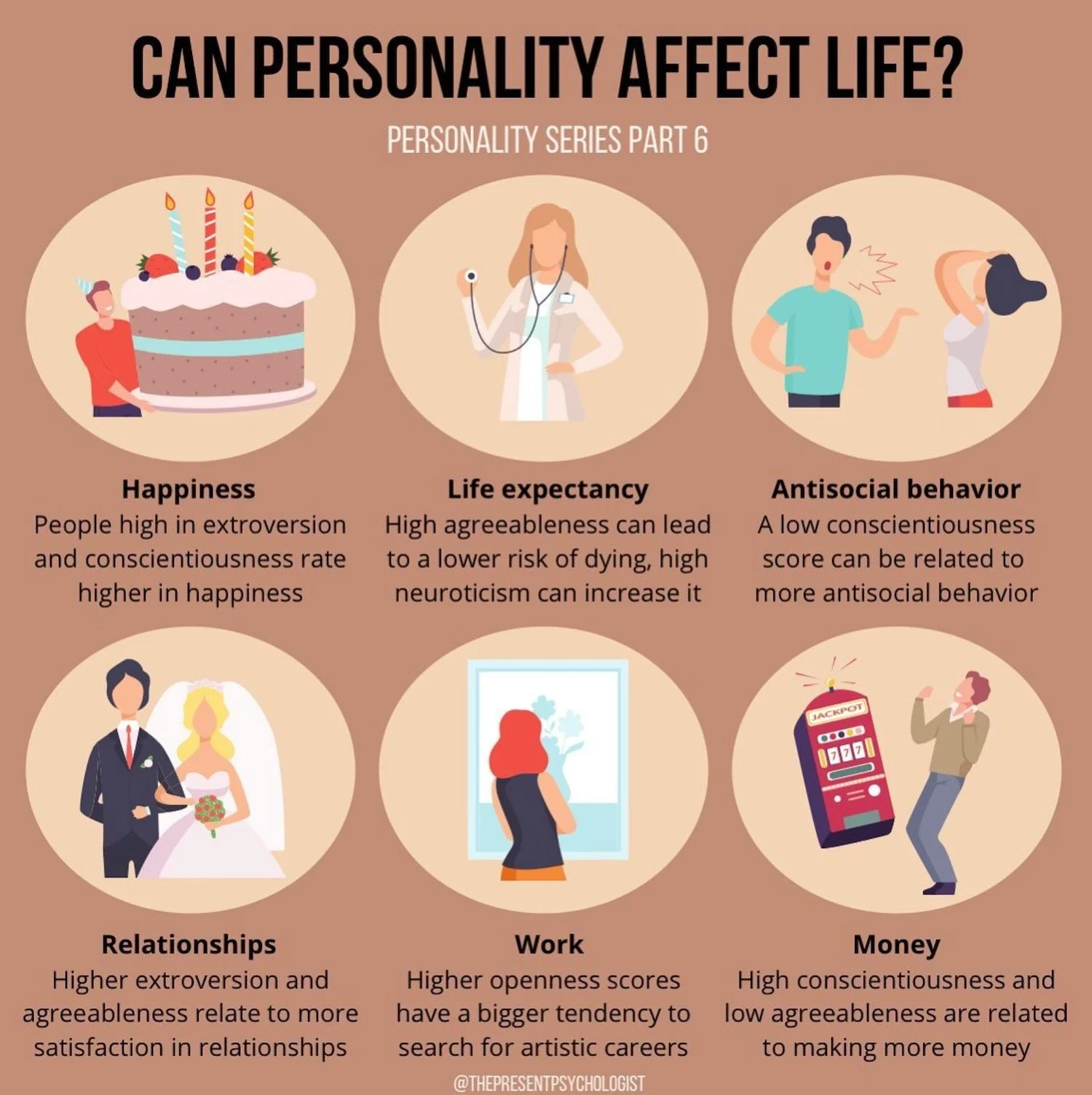
So what does it all mean?
It’s fairly obvious there’d be an upside and a downside to falling into one personality extreme or another. For instance, a person who ranks very low on agreeableness may be overly skeptical and critical of others, while a person who ranks extremely high may be painfully empathic or people pleasing.
While we all likely relate to some degree of every one of these qualities, knowing where we lie on the continuum can help us predict patterns of negative behavior that could limit us in our lives. Self-awareness, at its best, can guide us toward better decision-making. We know it’s such a dull cliché, but in this case, knowledge, quite literally, is power. It shows us what we need to work on and what we can afford to dial down. It can help also help point us in a direction in terms of what kinds of jobs will make us happy and what relationship dynamics will make us miserable. All of this may sound wildly obvious, but how much do we really stop to think about our personality traits and how much are we simply rushing through our lives at their whim?
Anyone interested in reaching their fullest potential may want to know where they currently land on the big 5. And to find out, we’ll leave you with a test.
This article is for informational purposes only. It is not intended to be used in place of professional advice, medical treatment, or professional care in any way. This article is not intended to be and should not be a substitute for professional care, advice or treatment. Please consult with your physician or healthcare provider before changing any health regimen. This article is not intended to diagnose, treat, or prevent disease of any kind. Read our Terms & Conditions and Privacy Policy.
