
This Doctor Says One Of These Vegetables A Day Can Completely Change Your Health
Worst case scenario? We eat another vegetable a day.

by The Candidly Team
Before you get mad at us for sharing something some doctor said on social media, remember this.
We’re talking about a vegetable here. Not a supplement. Not some new rubbery gummy vitamin with 14 grams of sugar.
A vegetable. And what is that vegetable?
It’s the good ol’ sweet and crunchy carrot!




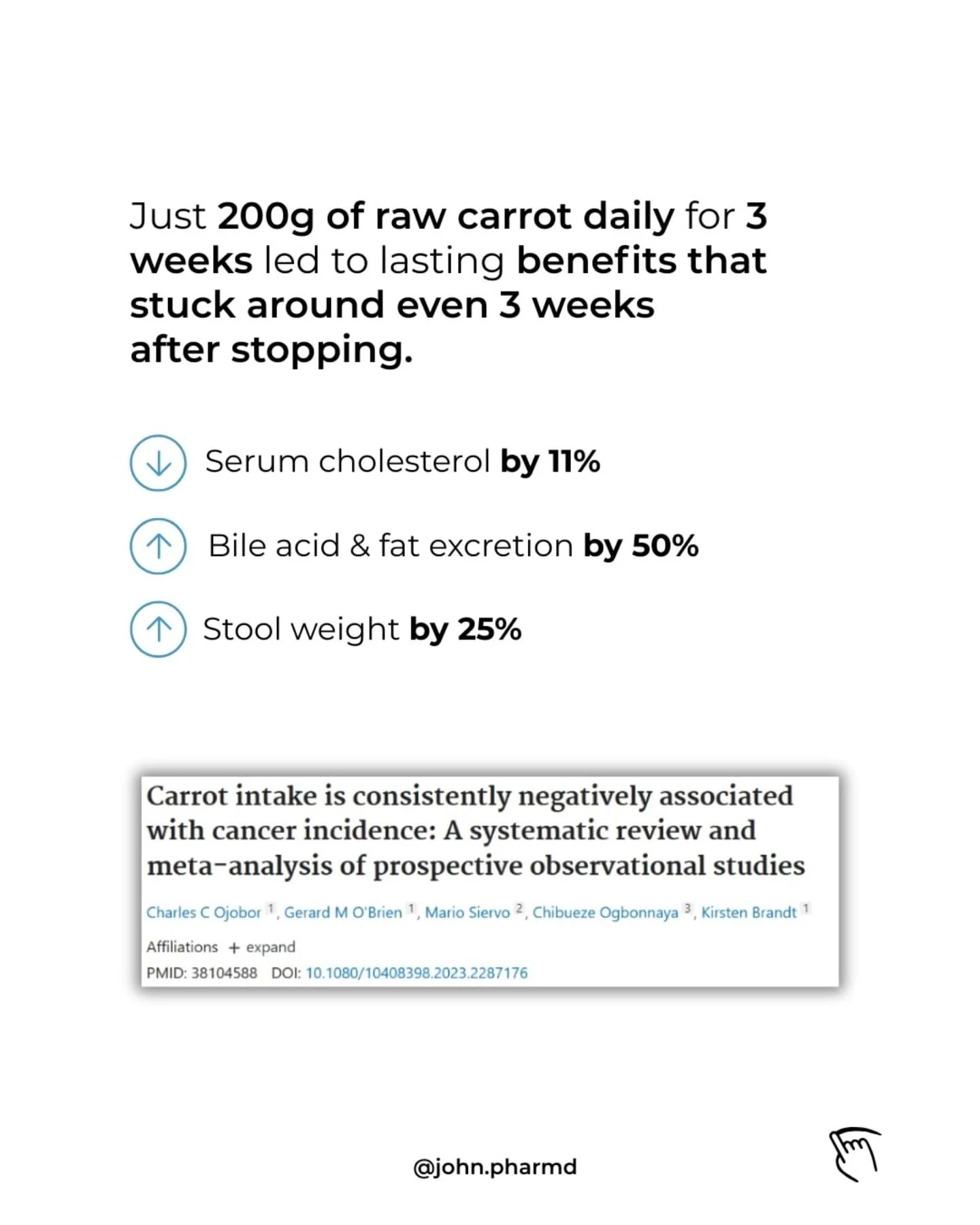
Before we break down the possibly exciting rewards of eating one full carrot a day, let’s show you what Dr. John Kim, a functional medicine pharmacist whose approach to health is certainly more holistic, claims it can do:
Ok, breathe deep. We’re not saying all of this is iron-clad. We’re just saying it made us curious to do a little dive of our own into the special powers of the carrot.
So let’s look at his claims one by one, starting with a BIG one:
1) Are carrots helpful to cancer prevention?
Studies have “robustly” linked carrot consumption with decreased cancer risk. According to the National Foundation for Cancer Research “Many studies suggest that carrots and other non-starchy vegetables decrease one’s risk of aero digestive cancers, which include cancers of the mouth, pharynx, larynx, esophageal, lung, stomach, and colon. There are also findings that suggest such vegetables can aid in the prevention of bladder and breast cancer.” A recent finding reported in the journal Nutrients reported that eating two to four raw carrots each week was linked to a 17 percent drop in colorectal cancer risk.
Bottom line: Carrots are full of carotenoids, a type of antioxidant that gives them their color. These can help protect cells from damage and could help lower cancer risk.
2) What about this idea that 200g of raw carrot can bring down cholesterol, boost stool weight, and increase bile acid and fat excretion?
This comes from a 1979, study wherein participants ate 200 grams of raw carrots at breakfast each day for three weeks and “significantly reduced serum cholesterol by 11%, increased fecal bile acid and fat excretion by 50%, and modestly increased stool weight by 25% … The changes in serum cholesterol, fecal bile acids, and fat persisted three weeks after stopping treatment.”
So whoa, that’s a lot to take in.
Bottom line: Carrots have been linked to lower cholesterol. Their fiber content could also help bulk up our stool, and they could increase bile acid excretion, which helps the body digest fats.
3) Do carrots balance our hormones?
Apparently carrots contain something called lignin, a fiber that is thought could help remove extra estrogen from the body, an effect mostly observed in animal studies.
However, according to Sue-Ellen Anderson Haynes, a registered dietitian nutritionist and national spokesperson for the Academy of Nutrition and Dietetics in an interview with CNBC, “It turns out that this ‘eating raw carrots’ TikTok trend has some truth to it because eating fibrous, raw foods can help your gut to release this extra estrogen … The good bacteria in your gut uses the fiber and converts that to substances that enhance gut, reproductive and overall health.” Yet, the idea that a carrot alone would bring down your too-high estrogen isn’t decidedly proven by science.
Bottom line: Carrots certainly have fiber and fiber is good for gut health and hormones, but so are other veggies like broccoli, cauliflower, Brussel sprouts, and cabbage to name a few.
4) Do carrots balance seratonin?
It’s wild how much seratonin and digestion are interlinked. According to The Cleveland Clinic, “most of your body’s serotonin is in your GI tract where it helps control your bowel function and plays a role in protecting your gut.” You can certainly help care for your gut-brain connection by eating both soluble and insoluble fiber (think whole fruits and veg), prebiotics and probiotics (think fermented foods like yogurt and sauerkraut), antioxidants and anti-inflammatory foods (think whole fruits and veg again).
Carrots have lots of anti-inflammatory antioxidants like carotenoids,and some studies have shown a diet rich in these could help lower depression and anxiety.
Bottom line: Because of their high antioxidant content, carrots have been listed as a possible good-mood food.
5) Do carrots help the gut-brain axis?
A recent study published in the Journal of Functional Foods found that “emerging research suggests that dietary fiber and SCFAs [Short-chain fatty acids] play a key role in reducing neuroinflammation and oxidative stress, and regulating neurotransmitters via the gut-brain axis.” And fiber intake through whole grains, legumes, fruits, and vegetables could help us produce more SCFAs.
So on a broader level, definitely EAT MORE FIBER.
Carrots are also a source of prebiotics, which are most common in fibrous foods and “act as nutrition for gut bacteria, helping them to flourish, according to Harvard Health.
Bottom line: Carrots are a source or prebiotics, which are shown to be gorgeous for the gut.
6) Do carrots help with weight loss?
Carrots can make us feel fuller for longer. They have a low glycemic index, so they’re unlikely to spike your blood sugar and leave you reaching for junky snacks.
Bottom line: One medium carrot has about 35 calories, takes a while to eat, and has endless crunch and sweetness. And so while we can’t certify every single promise made about a single food on the internet, we can safely say to enjoy that well-washed carrot and see what happens. It could be huge!
This article is for informational purposes only. It is not intended to be used in place of professional advice, medical treatment, or professional care in any way. This article is not intended to be and should not be a substitute for professional care, advice or treatment. Please consult with your physician or healthcare provider before changing any health regimen. This article is not intended to diagnose, treat, or prevent disease of any kind. Read our Terms & Conditions and Privacy Policy.
