
Are You A Porcupine Daughter?
Because we think we might be.

Image: The Family Stone | 20th Century Fox
by The Candidly Team
In families, there are people who dread the conversation at the Thanksgiving table, and there are people who create the dread in conversation at the Thanksgiving table.
And then, there is the porcupine daughter. The one who won’t let things lie. Who can’t stand sugarcoating and glossing over and pretending certain issues don’t exist.
According to Allison M. Alford, Ph.D., author of Good Daughtering*, “Porcupine daughters are often described as ‘too much,’ ‘too direct,’ or ‘the difficult one.’” They “bring up uncomfortable topics at family dinners,” “name tensions others try to ignore” and “ask questions that disrupt the status quo.”
Sound familiar?
Well then, let’s do what you do best and get into it.








How can you tell if you’re the porcupine daughter?
1. You feel like you’re carrying the moral or emotional weight of the family.
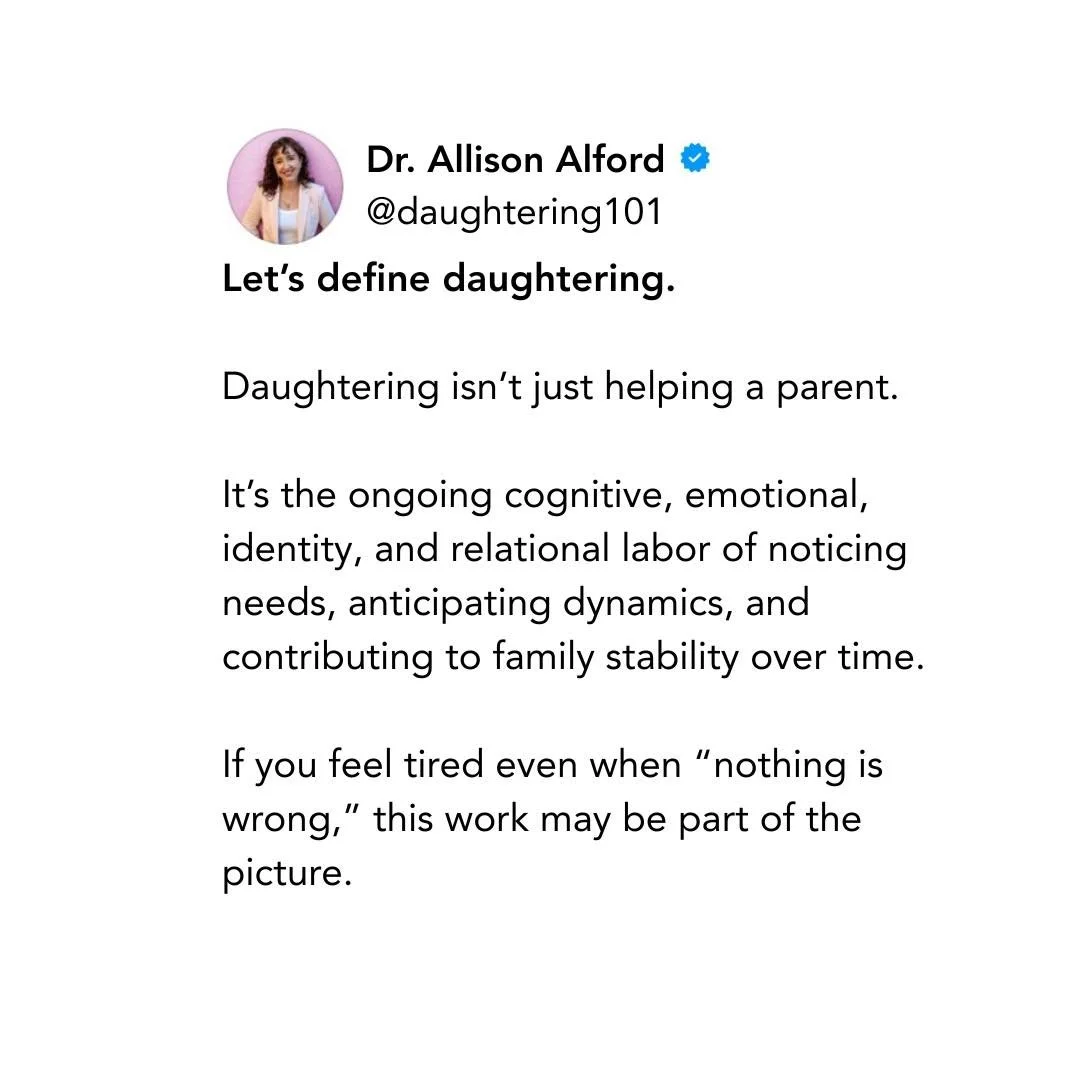
There’s a lot written about being a parent of adult children. But what about being an adult child of a parent? This is when the responsibilities and roles of caretaker really start to reverse. When more is often expected of you. Alford speaks about the hefty “invisible labor” of daughters. And if you’re a daughter who was already doing some of the parenting in the family as a child, that load is even heftier.
While some daughters take that on by taking on the role of peacemaker, others feel they have to be the one to push for change, to bring things out in the open, and insist on their recognition. This impulse can be even stronger if they’ve adopted a protective stance toward their siblings or the familiy unit, in general.
2. You can’t let “dark little secrets” stay secret.
You and your sibs traveled an accumulative 5,000 miles to have quality time as a family, and your dad stays silent all through dinner then slinks off to the living room to watch TV alone.
Meanwhile, your mom makes a series of not-so-subtle comments about your little sister’s weight at the table. “I made a low-fat version of the dressing if you’f like to try. Honey, I just read about this new diet where you don’t have to give up carbs. I have fruit if you want something lighter for dessert.”
You could sit there pretending all is well or you could just come out and say it:
“Dad, we’re all here to see you and you haven’t asked us one question about what’s going on in our lives.”
“Mom, stop it with the passive-aggressive diet talk. No one wants to hear it.”
3. And yet, you’re often treated like the problem.
Maybe some people in your family appreciate your no-bullshit approach to life, but more often in the discomfort of the situation, you get confronted with statements like:
Why do you always have to start something?
Can’t you just let it be?
They’re not gonna change. What’s the point of making them feel bad?
We just want to have a nice family gathering. Why do you want to fight?

Is it bad to be a porcupine daughter?
“When you think of an entire family system, existing over many decades, we can imagine that a ‘difficult’ child isn't there to simply cause problems, but to generate needed change,” wrote Alford. “From this perspective, the ‘porcupine daughter’ isn’t simply being difficult. She may be the one pushing for greater differentiation in the system—naming what others avoid, resisting automatic roles, and interrupting cycles that have gone unquestioned for years.”
All of this may sound good. But it’s important to consider two things.
1. What effect is being a porcupine daughter having on your own mental well-being?
It’s certainly possible to get hurt when you open yourself up in this way.
2. Are you handling things in a way you respect or consider emotionally sensitive/beneficial?
Being direct isn’t the same as being blatantly critical, morally superior, or outright cutting. Pay attention to what words you use and the timing of when you use them, because you want to stay on top of when you’re prickly commentary could have more to do with your own emotional triggers and reactions than the goal of creating boundaries or improving dynamics.

How do you use your porcupine powers for good?
Pick a time: When things are getting heated over a second glass of gamay, it’s not the time to let the pot boil over. Think about the result you want and when and how would be the most sensitive/effective time to bring up certain subjects or give feedback.
Choose your words: Blaming language invites defensiveness and sparks contention. Try to use “I” statements as much as possible to explain how certain actions and attitudes make you feel, and what would feel better to you.
Instead of “You show zero interest in me and don’t care at all about my life,” you might say “I feel pained when you don’t ask me questions about my life. I’m curious if you feel interested in what’s going on with me.”
Ask questions: Understanding and knowing one another better creates more empathy and patience. Your family may be tight-lipped or they may be eternally at the ready to list off a million complaints, but being mindful about the questions you ask could invite more closeness.
“Why do you think you feel so aware of our appearance? Were your parents critical toward your looks?”
Be open to feedback: We’re not asking you to swallow a bunch of criticism from your parents or anyone else in your family, but when you open up a tricky dialogue, you want to be a good model for accepting feedback.
“I understand that I can bring up things that make you uncomfortable. Is there a way we could talk about this that would make you more comfortable?”
Apologize when you crossed the line: If you lost your sh*t and said something hurtful, own it. Ruptures are gonna happen, but you can repair without stepping back your point.
“I’m sorry I used words that were harsh and defining. My goal is not to hurt you but to improve this part of our relationship.”
Encourage boundaries: This is one of those pop-psy terms getting a lot of traction lately, but the real idea of boundaries is to respect the autonomy of every person in a family and to find ways to not step over the lines that diminish one another. We’ve written a lot about boundaries HERE and HERE, but we love this way of thinking about it, which comes from Brené Brown and can be especially poignant for us porcupine daughters: “When we fail to set boundaries and hold people accountable, we feel used and mistreated. This is why we sometimes attack who they are, which is far more hurtful than addressing a behavior or a choice.”
This article is for informational purposes only. It is not intended to be used in place of professional advice, medical treatment, or professional care in any way. This article is not intended to be and should not be a substitute for professional care, advice or treatment. Please consult with your physician or healthcare provider before changing any health regimen. This article is not intended to diagnose, treat, or prevent disease of any kind. Read our Terms & Conditions and Privacy Policy.
