
3 Weight Loss Resolutions We Know You’ll Actually Do Because We’re Doing Them
Non-intimidating being the keyword here.
Image: Mean Girls | Paramount Pictures
If you buy something we link to, The Candidly may earn a commission. Gifted items will be called out (gifted), and affiliate links will include an asterisk (*). We have to eat, after all.
by The Candidly Team
We’re not going to start this with any of the usual cliché things about holiday weight gain,”new year new you” etc. We’re cold, we’re tired, and we’d rather just talk about a few simple tricks that might be of help to you if you’re trying to lose weight. Plain and simple.
Generally speaking, it feels kind of icky to paint with a broad brush when it comes to weight loss because every person’s relationship to food is different, as is their relationship to their bodies, their health, their mental health. So no, we’re not here to tell you about a new weird, fasting schedule or a confusing product that will get you “snatched” by February.
But we are here to talk about three very specific, (kinda fun) things that might just be gems on your own journey. Quite frankly, they’re things that have worked for us. They played a role in our own 48-year-old Editor-in-Chief’s drug-free, 60 lbs weight loss. And they don’t involve anything extreme or overwhelming when we already have enough on our plate for the season. (Pun not intended, but we’re honestly too tired to find another way to say that we’re tired).
Ok enough eating up your time with preamble. Let’s get to the good stuff.



Image: Portlandia | IFC
1. Munch pickled things.
This one is for the savory snackers among us - the people who rely on salt and crunch for serotonin, but find themselves 500 calories deep into a bag of chips every evening after eating fruit, veg, and lean fish all day long.
Pickled vegetables have the snap. They have the tang. What do they not have? The calories.
Let’s look at the labels of a few brands we’ve been snacking on lately:
Pickles* and Cornichons*: Those scrumptious deli style spears of pickle have about 5 calories each.
Cauliflower, French Beans, Artichokes, and Cauliflower*: An entire pouch of any one of these veggies runs between 10-15 calories. Practically less than a breath mint.
Giardineria*: You’ve probably passed this in the grocery aisle 8.7 million times. It’s a jar of mixed, lightly seasoned veg like carrots, cauliflower, pickles, and peppers that runs at about 40 calories for an entire jar.
Grazing and snacking are such huge impulses in so many of us, so meeting our hunger with preparedness, grabbable things that don’t make us feel like bloated, grease bombs is very helpful.
Now, the downside of pickled foods can of course be the sodium. So be sure to check labels and watch your quantities.
2. Walk. But really do it.
We’ve taken an intense, 90s Nike campaign approach to walking, and we do actually just do it. In the mornings and evenings with our dog. On a walking pad we got for $150 that we use for an hour or two while working or watching TV. Suddenly, we easily get in our 10k steps.
Why does this work so well?
Walking is non-intimidating, inexpensive, and uncomplicated. You don’t have to haul your way to the gym or do anything to prepare. And the health and fat burning benefits go on and on. We’ll hit a few highlights here, but you can also read our entire catalog of articles about it HERE, HERE, HERE, and HERE.
More steps equals more weight loss. Studies have shown it. We have experienced it.
Walking combats the effects of obesity-promoting genes: A Harvard researcher study found that a "brisk one-hour daily walk reduced the genetic influence towards obesity, measured by differences in BMI by half.”
Can help blast tummy fat in women: Another study showed that “walking exercise can provide a safe and effective lifestyle strategy against abdominal obesity and serum insulin resistance markers in obese women.”
Can cut back our sugar cravings: Research showed just a short walk made subjects crave less chocolate.
It’s gentle on our joints: By avoiding pain and injury, we can stay active as we get older.
3. Let fiber be your guide.
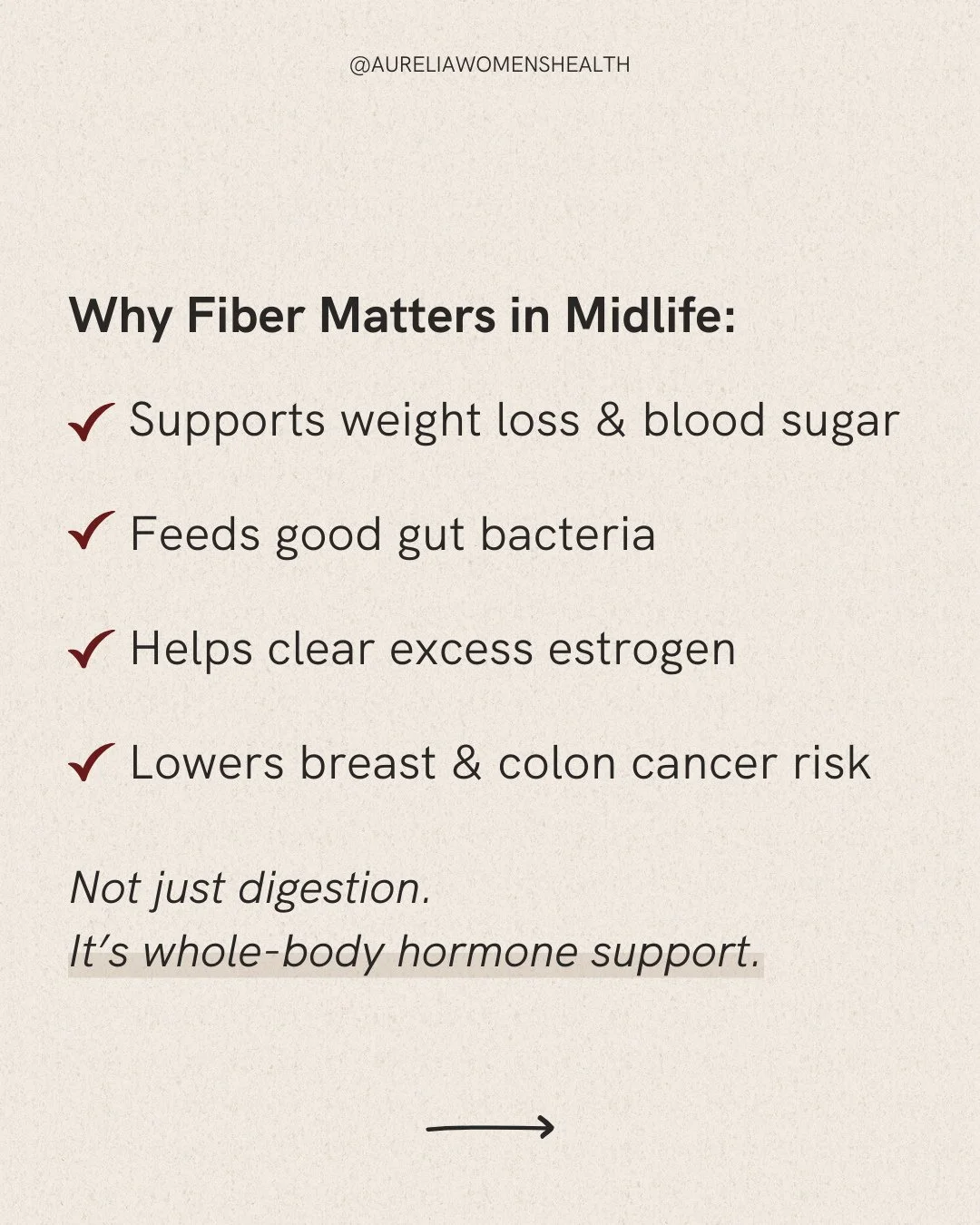
We recently wrote about how while everyone and their mother is fussing over protein (us included) not nearly enough of us are getting the fiber we so badly need. About 95% of us are falling short in fact.
Fiber is not just a fundamental building block of good health, but it is what satiates us - the food that makes us feel fuller hours from now when all the empty things we’d otherwise eat leave us scavenging for more.
Up until age 50 women should aim to get 25 grams of fiber a day. After 50, it can be about 21 grams. Another way to think about it is to try to get 14 grams of fiber for every 1,000 calories you eat.
And a great way to do this is simply to think of fiber first. Make it a big part of your first meal of the day with breakfasts like THIS OR THIS smoothie* our Editor-in-Chief makes almost daily:
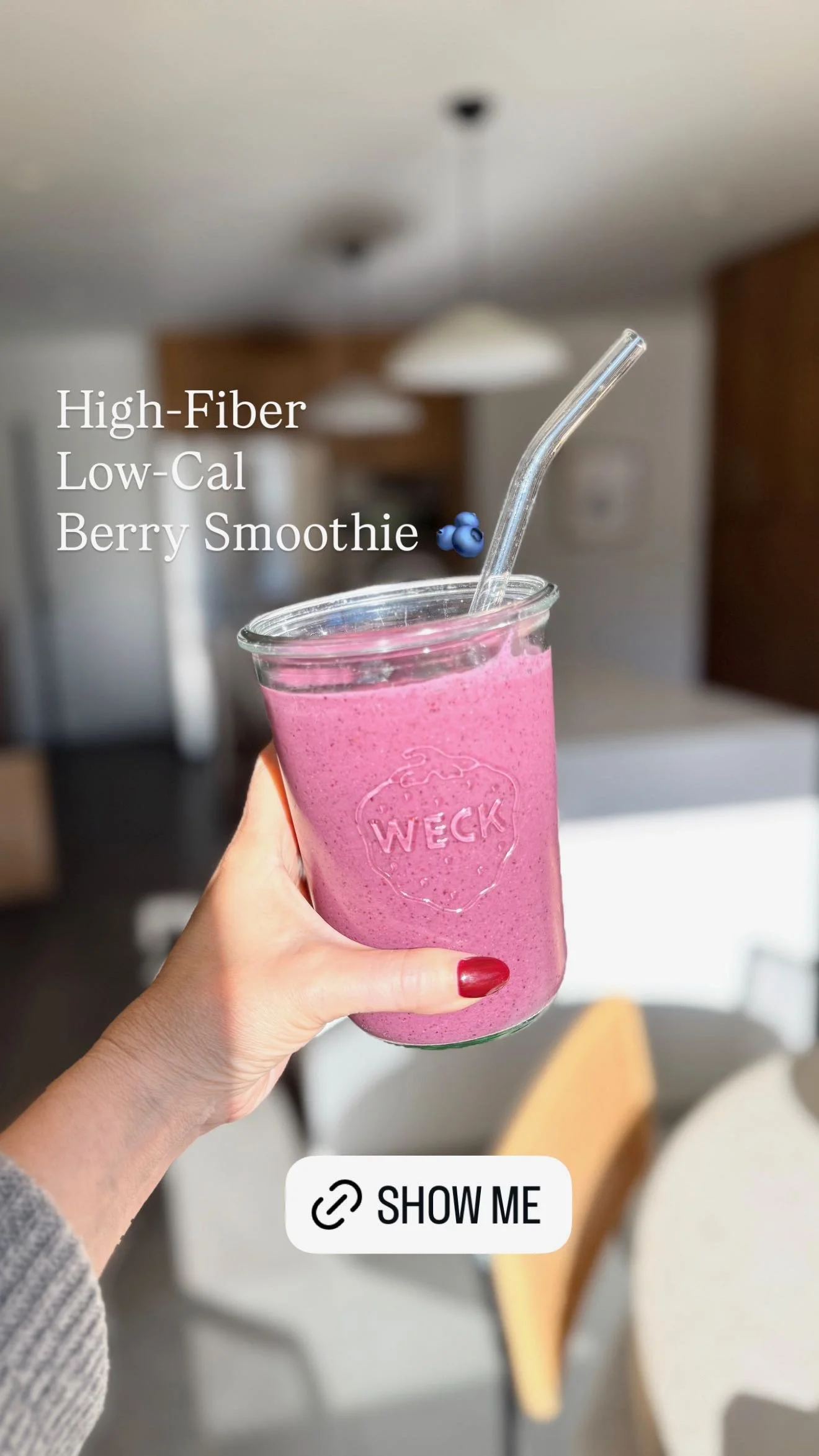
Have your fibrous foods take up the most real estate on your plate. And maybe even front-load your fiber, making it the first thing you eat during your meal. Some women swear by eating lots of fiber before a meal with carbs to increase satiation and help balance blood sugar. We say “why not since it’s great to get fiber from our meals no matter what?”
If you need a little pep rally to get into it, here’s a short list of incredible things fiber can do for you:
Help with digestion and bowel movements, also supporting bowel health.
Helps detoxify the body, binding to toxins and cholesterol.
It’s good for the heart and can reduce cholesterol levels.
It can slow down sugar absorption and improve blood sugar levels.
It keeps you feeling full, despite often having less calories than other foods.
And now, here is an even fuller list of common high fiber foods. Don’t you love an article about weight loss that tells you to eat more of something?
Happy 2026! New year, new use of foods to actually get us where we want to be.
LEGUMES, NUTS, SEEDS:
Split peas (1 cup boiled): 16g
Lentils (1 cup boiled): 15.5g
Pinto Beans (1 cup): 15g
Black beans (1 cup cooked): 15g
Cannellini, Navy, Great Northern beans (1 cup canned): 13g
Chickpeas (1 cup): 12 grams
Lima Beans (1 cup): 11.5g
Chia seeds (2 tablespoons): 10g
Flax seeds (2 tablespoons): 8g
Peanuts (1/2 cup): 7g
Almonds (1 ounce, about 23 nuts): 3.5g
Pistachios (1 ounce, about 49 nuts): 3g
Sunflower kernels (1/4 cup): 3g
FRUIT:
Passion fruit (1 cup): 24g (who knew?!)
Guava (1 cup): 9g
Raspberries (1 cup): 8g
Blackberries (1 cup): 8g
Pomegranate (1 cup arils): 7g
Persimmon: 6g
Kiwi (1 cup): 5g
Pear: 5.5g
Apple: 4.5g
Blueberries (1 cup): 4g
Banana: 3g
Orange: 3g
Strawberries (1 cup ): 3g
Mango (1 cup): 3g
Prunes (4): 3g
VEGGIES:
Green peas (1 cup boiled): 9g
Acorn squash (1 cup): 9g
Broccoli (1 cup boiled) 5g
Artichoke: 5g
Carrots (1 cup): 5g
Turnip greens (1 cup boiled): 5g
Brussels sprouts (1 cup boiled): 4.5g
Potato (baked): 4g
Sweet potato: 4g
Sweet corn cup: (1 cup boiled) 4g
Beets (1 cup): 3.4g
Cauliflower: (1 cup raw and chopped) 2g
GRAINS:
Whole-wheat spaghetti (1 cup cooked): 6g
Barley (1 cup cooked: 6g
Bran flakes (3/4 cup): 5.5g
Quinoa (1 cup cooked): 5g
Oatmeal (1 cup cooked): 4g
Popcorn (3 cups): 3.5g
Brown rice (1 cup cooked: 3.5g
Whole-wheat bread (1 slice): 2g
This article is for informational purposes only. It is not intended to be used in place of professional advice, medical treatment, or professional care in any way. This article is not intended to be and should not be a substitute for professional care, advice or treatment. Please consult with your physician or healthcare provider before changing any health regimen. This article is not intended to diagnose, treat, or prevent disease of any kind. Read our Terms & Conditions and Privacy Policy.
