
We Asked A Woman Who Lost 75Lbs Our Most Pressing Questions About Taking A GLP-1
And we didn’t beat around the bush.
This article is for informational purposes only. It is not intended to be used in place of professional advice, medical treatment, or professional care in any way. This article is not intended to be and should not be a substitute for professional care, advice or treatment. Please consult with your physician or healthcare provider before changing any health regimen. This article is not intended to diagnose, treat, or prevent disease of any kind. Read our Terms & Conditions and Privacy Policy.
Note: Kristen Adams is an affiliate partner with EllieMD. We don't link to their site, and The Candidly is not affiliated nor do we endorse any products associated with EllieMD or any similar brand.
by The Candidly Team
At this point, we have so many questions about GLP-1s, it’s dizzying. On one hand, it’s the latest thing being sold to us left and right in all kinds of questionable forms. On the other, it feels deeply secretive. Many women don’t want to talk about it. Many celebrities don’t want to say they’re on it. And since it’s rightly a subject that should mainly exist between a person and their doctor, it’s hard to parse out what we should know about it.
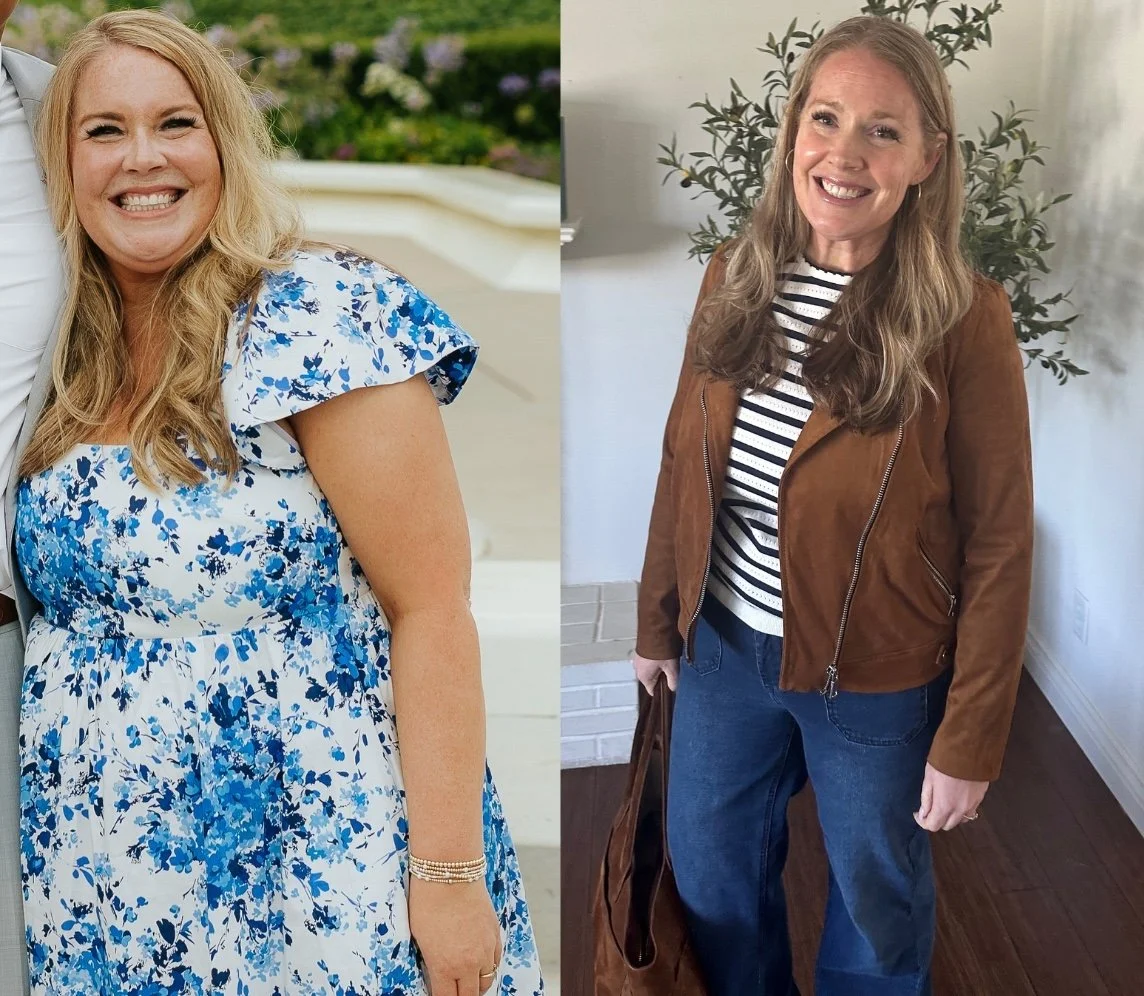
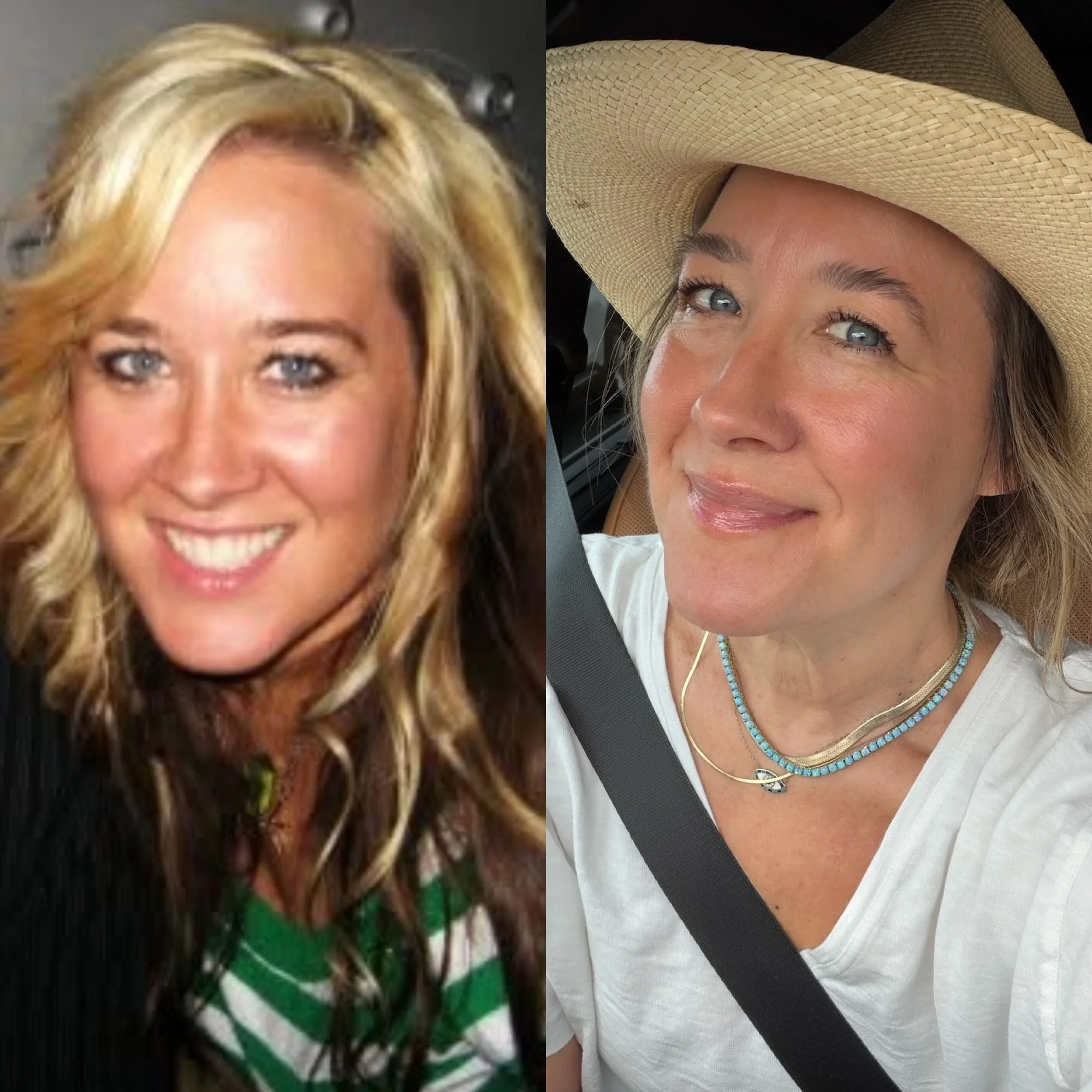
In our desire to cut through the noise, we decided to talk directly to a fellow woman over 40 who’s lost 75 lbs on a GLP 1. Kristen Adams started out with her own binder’s worth of questions and some skepticism but also a willingness to get into the weeds. She shared the nitty gritty of her journey on a GLP-1 and what she’s learned along the way.
So basically, if you’ve ever wanted to have an open and intimate conversation with a friend about what it’s like to be on a GLP-1, here’s your chance.






1. Obviously everyone has their own story that takes them down a path to a GLP-1. Can you walk us through yours? What, ultimately, led you to that decision?
When I reached my 40s, I had multiple things that changed my body. I got married and jumped right into being a stepmom to two teenage boys. I went from being single and just taking care of myself to figuring out how to run a household, help feed three men while also working full-time. I probably put on my first 10-15 extra pounds during this time while I was trying to figure it all out. I also hit perimenopause HARD. I joke that if there was a lottery to win perimenopause symptoms, I must have won, because I had them all. Especially the weight gain around my midsection. More and more weight started to creep on. During all of this, I was diagnosed with a heart condition that required open heart surgery. Long story short, I wasn’t able to really move my body well for almost three years, and I found myself with 90 extra pounds on my frame. All this to say, in a short span of time, my body dramatically changed, and I ached to feel like myself again.
I had heard about Ozempic, but like a lot of us in our generation, I instantly dismissed it as another fad, because I am very much of the Fen-phen era. I kept waiting for the news story to break about how dangerous these GLP-1s are. So I continued trying to lose weight the way I had always done, but it wasn’t working and I was actually gaining more weight bit by bit.
Eventually, I got curious, but I didn’t want to admit to anyone that I was doing my own research because I was still so skeptical and there was so much stigma around GLPs. I listened to several podcasts from people I trusted and admired and was actually shocked to hear their take on this class of medications. They were backed by data and research. When I learned that these medications had actually been around long enough to have long-term studies and outcomes, that’s when I considered starting. I made an appointment with my doctor fully expecting him to push back on me or tell me this was a bad idea, but he didn’t. In fact, he was really supportive and felt it was a good fit for me. Again, he cited studies and research about how safe these are when done properly.
It took almost a year of being on these meds before I was comfortable talking about being on them publicly. Now I will literally shout it from the rooftops. If my story can help someone feel more comfortable asking questions to see if these could be the right fit for them, I am all about it. I don’t say this lightly, but they gave me back my life.
2. Can you explain the difference between all the different ways to get them? Brand name? Compound? Micro dose? What? And is there a safety concern difference among them?
I think the easiest way to organize this answer is to break down the way you can get your hands on these peptides into three main categories. This is an over-simplification, but here we go…
The first way to get your hands on the medication is through your primary doctor prescribing them via your insurance.
These are typically your brand name medications. Anecdotally, these are the hardest to get your hands on affordably, because insurance companies make it tough. The pro of going this route is that you are getting brand name medication, but the con is that the medication comes in a prefilled pen which makes the dosing set with little nuance, which, in hindsight, would have been a bad fit for me. This is the most expensive option. I believe that is changing, and they are doing a cash pay option now, but I think they are still more expensive.
The second option, which is the option I use, is getting medication through a compounding pharmacy.
Some primary doctors will go this route for a handful of reasons, more controlled dosing, can be less expensive than the brand name versions, etc. Within this category you also have online telehealth platforms like EllieMD, Midi, Fridays, etc. where you fill out a medical intake form, a doctor in your state is assigned your profile, and they determine if these are a good fit for you. This option is appealing to people who might not have a solid primary care provider or in my case, I wasn’t able to get covered by my insurance, so my primary doctor was okay if I got my meds from one of these platforms. The pro of going this route is that it’s far more accessible, there isn’t a lot of red tape, the medication comes in a vial so you are able to have more controlled dosing (which can be a positive or a negative if you are doing it with no guidance) and they are compounded with other things that can be good for you like B12. There are things you need to watch out for in this space. Do your research. You should be getting the meds from a licensed 503A pharmacy, not a 503B. A 503A compounding pharmacy should be making custom medication for you when you place your order. Be wary of med spas. This is a generalization, but if you go that route, ask some questions. Ask who the doctor on site is, ask what pharmacy they use and is it a 503A vs 503B. They are cracking down on med spas because they largely are using 503B pharmacies. Additionally, there is not as much medical oversight if you go this direction. For me, I had the best of both worlds. My doctor was on board, and I was able to get the meds safely through an online platform.
The third option, and this is probably what you are seeing the most online, is research-grade GLP-1s.
This is often called the grey market or black market. Research grade is not intended for human consumption. There are massive safety concerns going this route. This is the literal wild west, but it’s the fastest, cheapest and easiest way to get your hands on the medication. I do not recommend this. I can’t stress that enough. You do not know what you are getting. You can get these easily online, but because they do not require a prescription, there is no guidance or instructions. These come in powdered form and you need bacteriostatic water to reconstitute. The margin of error is huge. You can throw a stone and find an influencer telling you how to reconstitute these and then they share their dosing which is WILD to me because how much product is in the vial and how much water you add all impact the dosing and this is rarely disclosed and dosing is not a one size fits all. Most of these research-grade GLPs will show their purity testing and some will even share their COA (certificate of analysis), but if you don’t know what you should be looking for, people just see that their supplier has this testing and assume they are safe. They don’t know how to read the data. They aren’t cross referencing the batch they bought with the published COAs. Most people don’t know that purity is the easiest thing to prove, but just because it shows purity, does not mean that the amount in the vial is accurate, that there are no endotoxins in that vial, etc. Sadly, most people just see that they are so much cheaper and someone online is telling them their vendor is safe and good, and people don’t dig deeper. You are rolling the dice going this direction.
Microdosing is a whole separate conversation.
This speaks to dosing and honestly, it’s just a marketing term that has grown a life of its own. The term started with Dr. Tyna Moore who was the first to use it. Her context is vastly different than what it’s come to mean today. Early on, she was using a true microdose (a significantly lower dose than the pharmaceutically approved starting dose) to help her patients dealing with issues outside of weightloss like inflammation, etc. The internet did what it does, and grabbed onto this term and now it’s come to essentially mean various things. It’s not a formal clinical term. It’s not an approved term in medicine. It’s marketing. To generalize, it’s now come to mean just a low dose of the medication, typically the clinically approved starting dose of the medication. There’s almost a weird sentiment online that somehow a microdose is better than a regular dose? People love to say I’m microdosing a GLP-1 for weight loss as if that’s safer and better? This is a generalization, but if someone has more weight to lose than say 5-10 pounds, most likely they will need to increase their dose beyond what is now considered a microdose. And that’s fine. As long as it’s being done slowly and methodically.
That said, a low dose of this medication is amazing for maintenance, some weight loss, helping with all things outside of weight loss like anti-aging and inflammation, the list goes on with what they are discovering a low dose of a GLP-1 can do. It’s incredible. Microdosing can be amazing.
3. Can you share if your insurance covers yours and how much it is?
My insurance did not cover it. My doctor tried to get me covered for both Ozempic and Tirzepatide, and I was denied for both, which felt crazy at the time. I was pre-diabetic with a preexisting heart condition; I felt like it should have been a slam-dunk approval, but it wasn’t. That said, not getting approved wound up being a silver lining in regards to the overall experience I’ve had with the medication.
I think this is changing, but the brand name medication that insurance covers comes in a pre-filled pen with preset dosing. Each of these doses are what the FDA has approved. Every time you need to go up in your dose, or titrate up as it’s called, you are locked in at doubling your dose. This medication is really strong. Even one more unit on a syringe can be felt. Doubling the dose can cause a lot of the side effects people experience.
By getting my GLP-1s through a compounding pharmacy, it allowed me to have much greater control over my dosing and I could titrate up very slowly, one or two units at a time, which I credit to why I’ve had little to no side effects.
4. Do you have any experience with these new non-medical “natural” GLP1 supplements? What about peptides? We’re … confused.
I do, I tried a few of those before starting a GLP-1. Personally, I feel like they are a bit of a scam. Unfortunately, they are cropping up left and right now because of the popularity of GLP-1’s, but they are largely a waste of money.
5. Were there any side effects or symptoms off the bat that had you thinking "maaaaaybe this isn't worth it?" How did you feel right away? Did that change over time?
Personally, I don’t have side effects, but I do have a friend or two who have. The most common is nausea or constipation. Taking a quality magnesium and making sure you are paying attention to your fiber intake helps with that issue. Since I get my peptides from a compounding pharmacy, they always include anti-nausea meds with each refill. I haven’t had to use them, but I appreciate that I have them just in case.
Often, the big side effects you hear about are from being dosed too high too quickly. Additionally, people are getting these peptides online through research-grade sites with little to no oversight; this is where things can really go wrong and you hear about people winding up in the hospital. You absolutely MUST get your peptides from a credible source and you need to be dosed very specifically with medical oversight. You need to go slowly and up your dose very methodically. Too many people just crank up their dose and run into big problems.
6. What were the most immediate results you noticed? Did you simply feel less interested in food or was it more layered?
Definitely more layered. I noticed right away that my food noise was gone. My afternoon cravings were nonexistent. It was amazing. I have a sweet tooth and I noticed I could have a bite of a treat and be just fine. I didn’t need more than that. I kept thinking, wait. Is this what it’s like for people who don’t have to worry about their weight? I felt like I understood that for the first time.
7. Were there specific setbacks you had with weight loss before taking a GLP-1? How did those change once you were on it?
Yes, yes, and yes. I was your classic perimenopause/menopausal woman. I was doing everything right to try and lose weight “naturally.” For me, eating healthy and moving my body wasn’t working, and I was incredibly frustrated. All the things I had always done didn’t work anymore. So when I finally decided to try a GLP-1 and it started working, I had hope again. I still needed to eat well and I still needed to move my body, the difference was the GLP made it so all of the things I was doing worked.
8. In your experience, what would you say is the biggest misunderstanding or misconception about these drugs?
That’s a great question and I actually could list out multiple misconceptions, but I think the main ones are that taking this is cheating and that the weight comes off so fast.
These are not cheating. Not even close. Ask anyone who is either on one or who has done one. These are life-changing and I don’t say that lightly. What these did for me as a 50-year old squarely in menopause gave me my life back. GLP-1’s take away the white-knuckling aspect of dieting and make it so much easier to form those good habits that make the weight loss sustainable. Yes, there will always be people who just use these to starve themselves skinny, but they are opening up a whole host of other issues for themselves on the backside. For those who use these medications properly, they are making wise food choices, paying attention to their protein and fiber and moving their bodies. The perk is, they are doing it without the food noise and a little help tamping down their appetite. Having the smaller appetite forces you to choose protein and high quality foods first because you do get full faster.
Additionally, people think these work so fast because it feels like people are losing weight overnight. I think that’s partly because people don’t pay attention to someone’s weight loss until it’s noticeable and then it seems overnight or people are cranking up their dose and just starving themselves. I don’t think anyone noticed my weight loss until I was at least six months into taking it. When done right, the weight loss should be somewhat consistent, but the goal isn’t to lose 20 pounds in a month. When dosed properly and with the right food intake, weight loss shouldn’t exceed more than 1-2 pounds per week, sometimes more like .5 pounds.
9. Is it really still just as much "work" to lose weight on a GLP-1? How much of the heavy lifting do you feel is being done by the medication itself?
I view using a GLP-1 a little differently. If you are doing them as they are intended, you are being mindful to eat healthy, whole foods, you are moving your body and lifting weights and because of the way the medication works, you are eating less. The key difference is the medication removes any “white knuckling” that you might feel if you lost weight without the help of a GLP-1. Ultimately, it’s an amazing opportunity to develop strong, healthy habits without having to constantly battle food noise, feeling like you are starving and constantly focusing on food.
10. Can you talk us through a little timeline of your results?
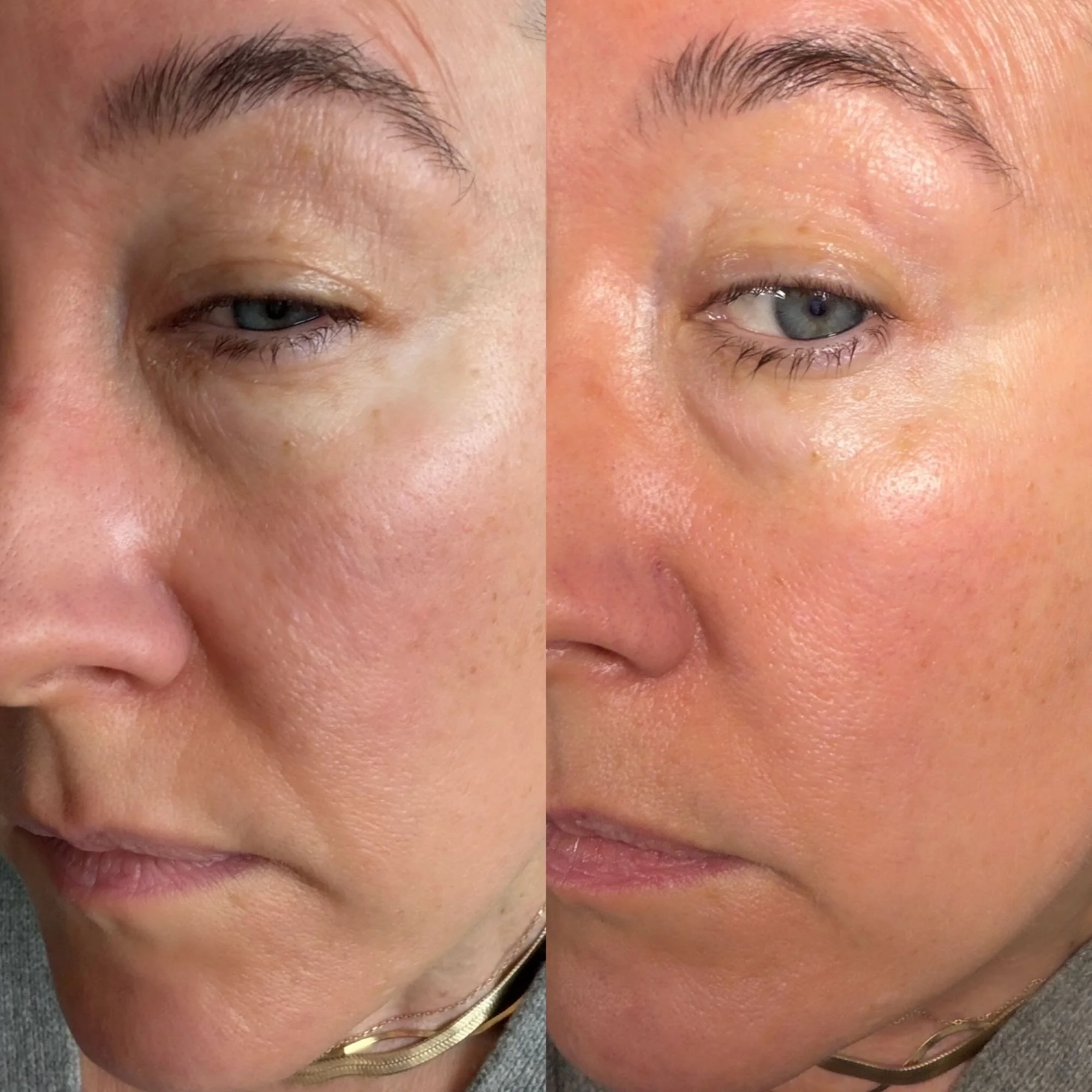
Sure. I’ve been on a GLP-1 for almost two years and I am down 75 pounds. Initially, I was losing about 1-2 pounds per week and that continued probably for the first 6 months or so. After that it’s been more like .5 - 1 pound a week. Everyone is different, so I hesitate even sharing that. Some people can be slow responders and they just need to give it time and get to the right dose for it to kick in and start working. Some people lose faster than me. I was always happy to take it slow. Going slowly also allows your skin to bounce back better and gives you time to really reinforce good habits to help with maintenance.
11. One of the biggest things we hear from medical professionals is the importance of involving your doctor in the entire process of taking this kind of medication. How involved has your doctor been in your weight loss journey?
My doctor has defintely been involved. Especially at the beginning. Initially, I would discuss my dosing and how I was feeling and if it was time for me to increase. Having your bloodwork checked while on these medications is critical. As I got more comfortable with the medication, my check-ins weren’t as frequent. That said, he’s very aware that I am on the medication and where I am sourcing it from and what my current dose is.
12. Do you see yourself as being on a GLP-1 forever?
I do. These medications are safe to be on long-term. I still would like to lose 15 more pounds. Once I do, I will start to taper down my dose and I’d like to be on the lowest dose that helps me maintain and keeps the food noise quiet. I don’t know what that will be, but I plan on staying on a GLP-1 at some level always.
13. One of the concerns we see out in the GLP-1 research world these days is its potential impact on bone health, specifically an increased osteoporosis risk, which we know is especially significant to women over 40. Are there any medical tips you were given or steps you're taking to address that possibility in your routine?
Yes, it’s the same tips that should be non-negotiable if you are taking a GLP-1 regardless. You need to be getting enough protein, lifting weights, moving your body and making sure your calories do not drop too low, which in turn makes you lose weight too quickly.
This article is for informational purposes only. It is not intended to be used in place of professional advice, medical treatment, or professional care in any way. This article is not intended to be and should not be a substitute for professional care, advice or treatment. Please consult with your physician or healthcare provider before changing any health regimen. This article is not intended to diagnose, treat, or prevent disease of any kind. Read our Terms & Conditions and Privacy Policy.
